

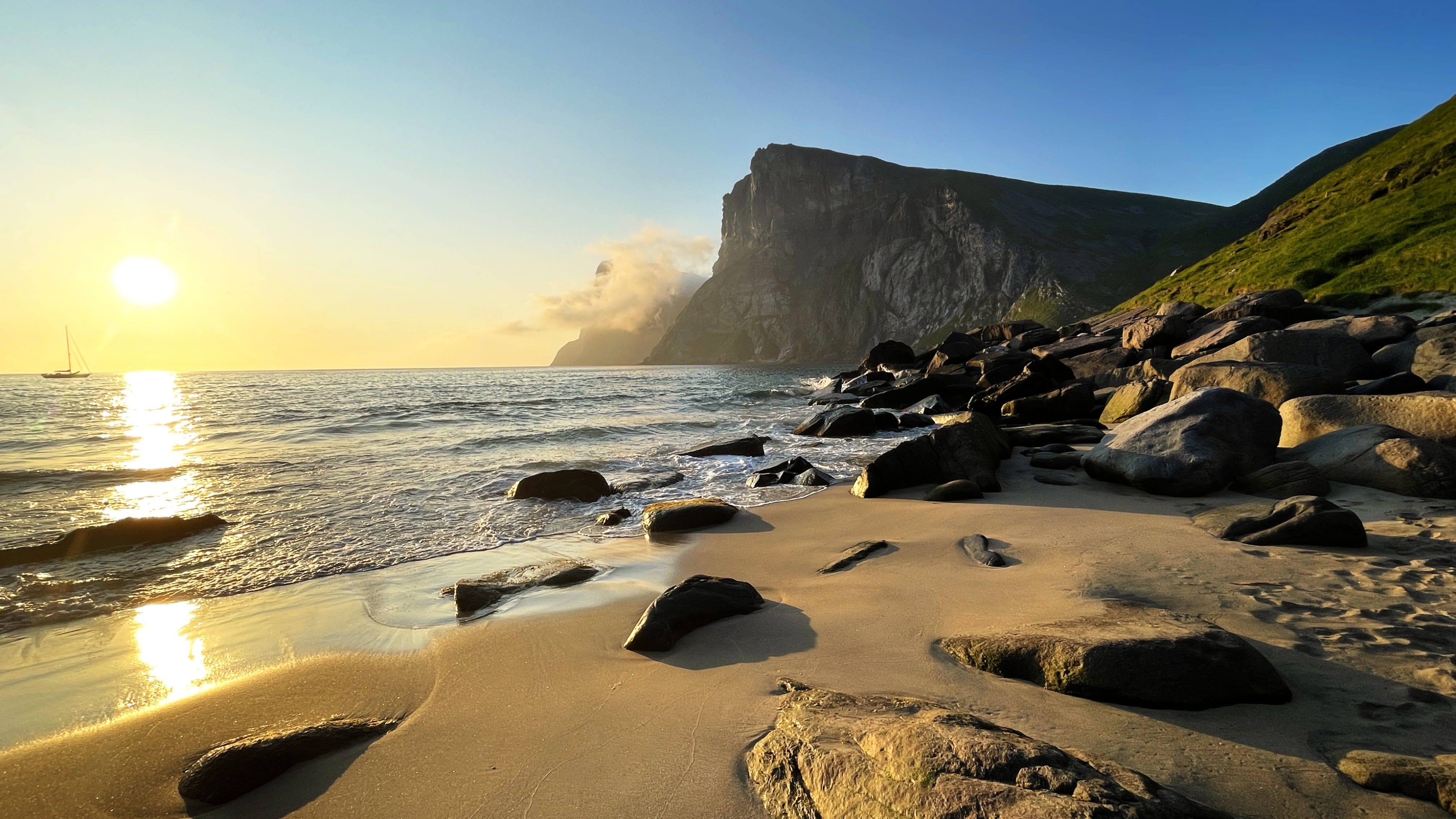
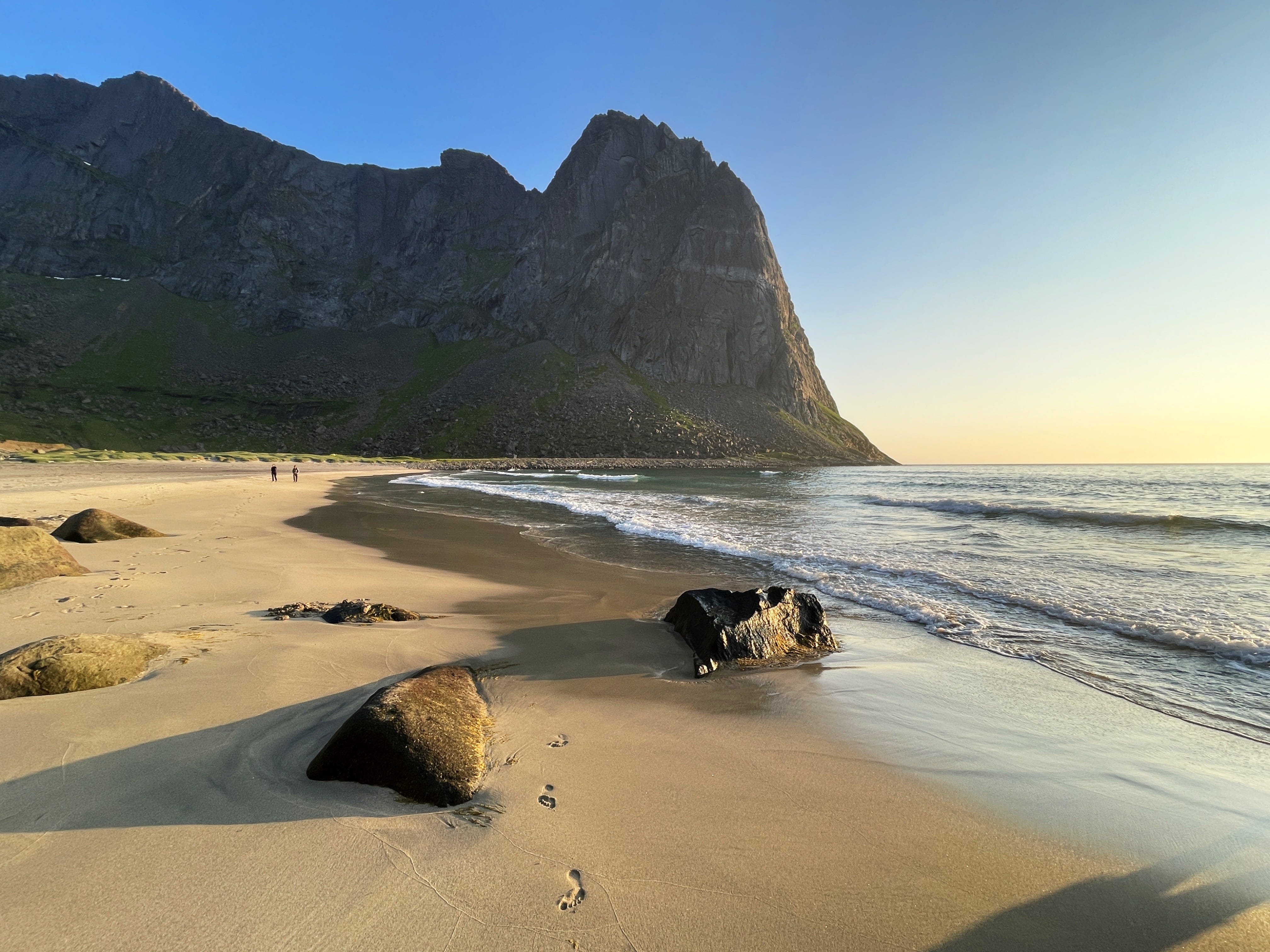
For a moment I envied the people on the sailboat, silhouetted against the midnight sun. But I quickly realized how silly the thought was. I was standing in what was probably—no, undoubtedly—the most beautiful place I’d ever been, my feet planted in warm Arctic sand, the surf rolling in between two Rocks of Gibraltar.
Norway’s Lofoten Islands are, at times, hard to comprehend. The place is astoundingly beautiful and dramatic. Certain views of its white sand beaches and turquoise waters can easily double for the Caribbean, until you look up and see the towers of rock or feel the iciness of that water. It’s an archipelago risen nearly vertical from the deep blue of the North Atlantic, jutting far to the west of Norway’s eastward-curving Arctic mainland like a giant Viking’s finger pointing to westward voyages of the distant past.
The Lofoten Islands are a clichéd fairy-tale land in a country often described as a fairy tale, with its impossible fjord-side villages and waterfalls around every bend in the road.
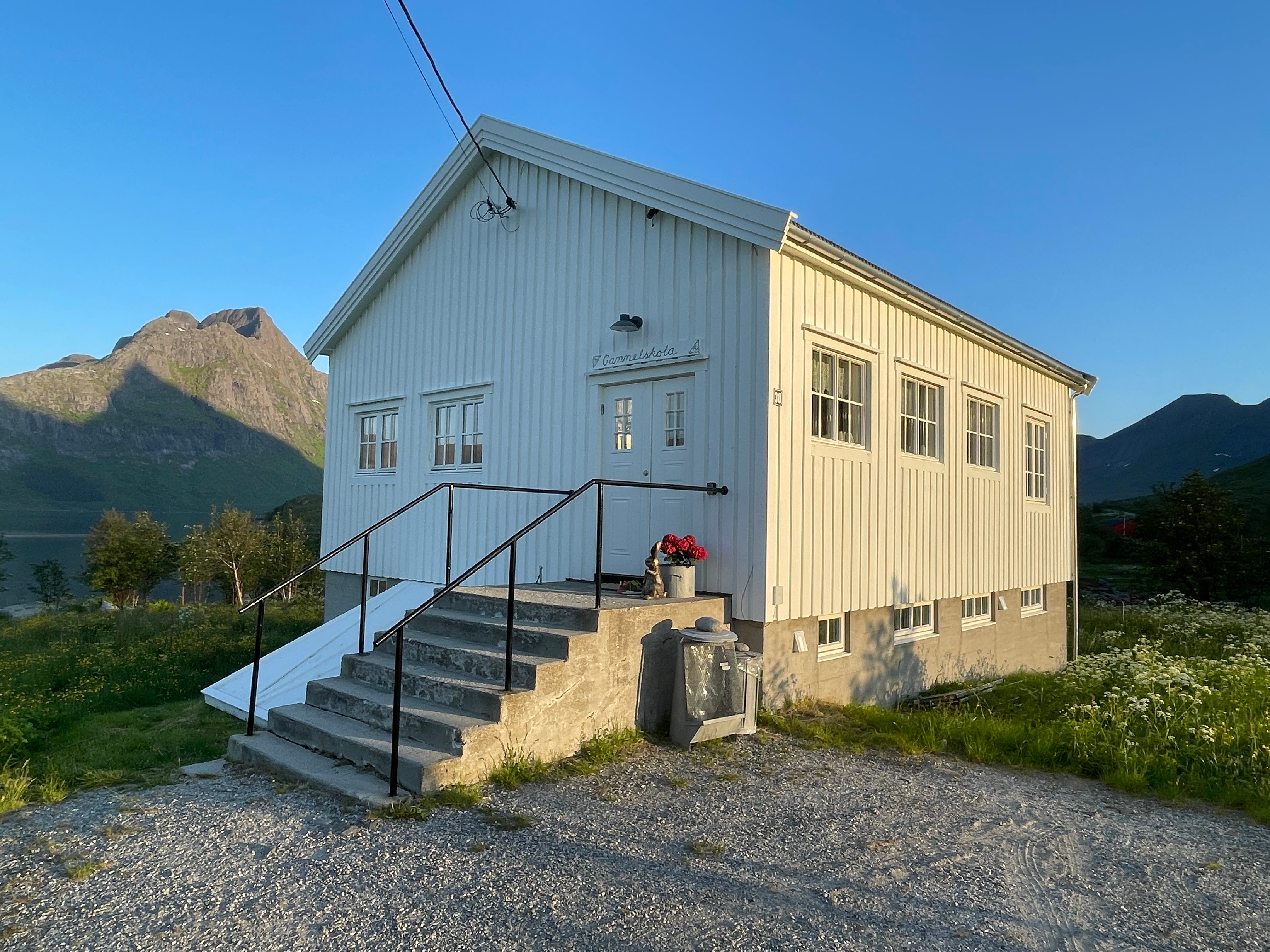
This beach between the two Gibraltars can only be reached by foot. The trail started right off the doorstep of an old one-room schoolhouse turned vacation rental. The home faced east over a protected bay with placid waters surrounded by quintessential Norwegian peaks—pointy and green.
The trail led inland from the bay, soon skirting the shore of a freshwater lake graced with a forest of stunted Arctic trees, then up a rocky slope and past a stone shelter to another lake, this one bordered not by trees, but by stark gray and white boulders.
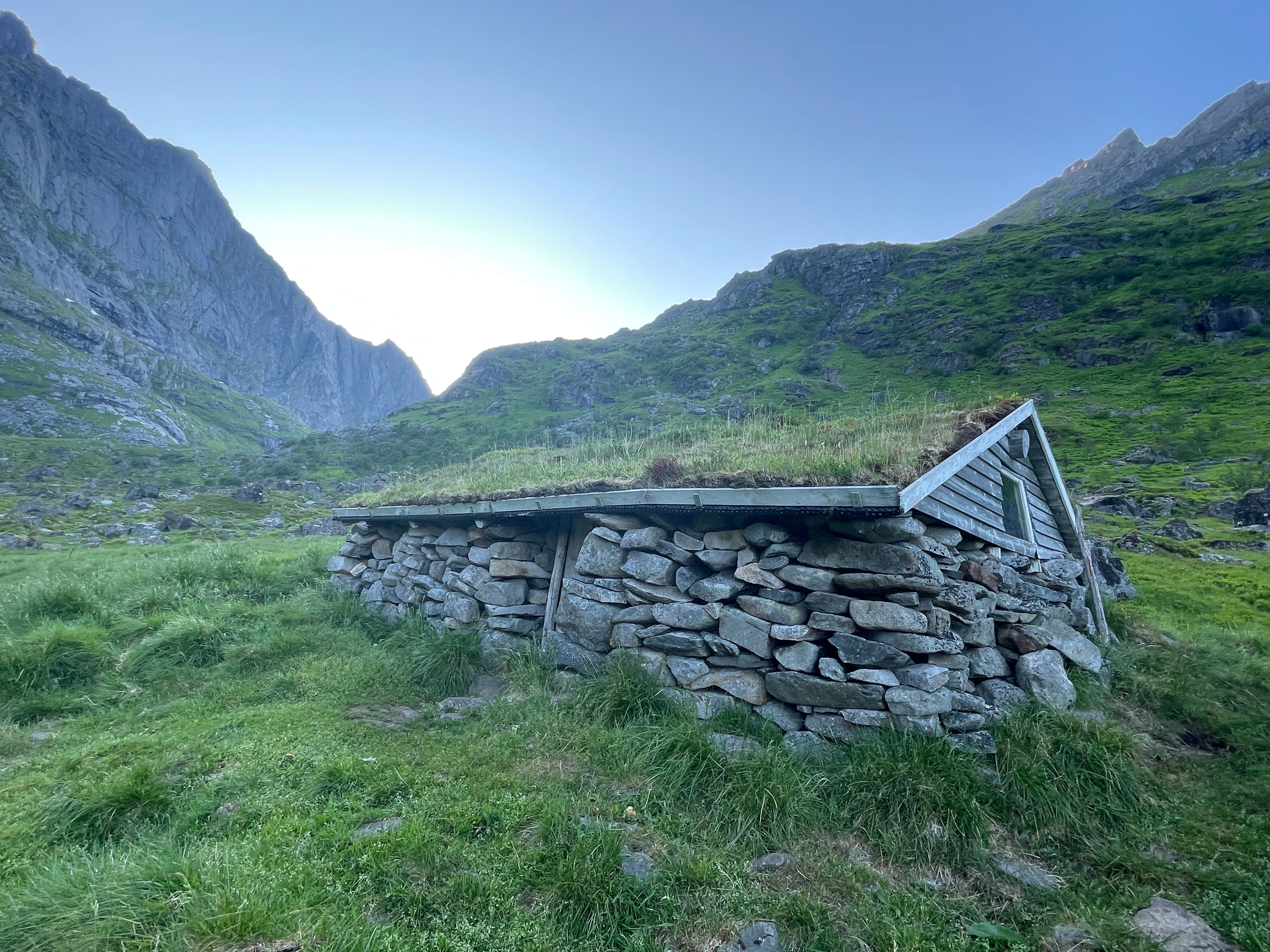
We were crossing at a narrow point in the island over a low saddle between enormous, steep ramps of solid, glacier-polished rock. Our destination was the other shore, opposite the protected waters by the schoolhouse. This other shore was the true coast—land’s end. From there to the west, the next rock would be on Greenland, far, far beyond the horizon.
The shoreline of the second lake was rugged, so we slowly picked our way over and around the gray and white boulders. The rock seemed as hard as diamond, and often equally as smooth along the unbroken surfaces, but sharp along the fracture points. Above the broken rock and upper lake, the trail reappeared through a grassy slope to the final rise of the saddle.
A young Brit stood motionless on that apex next to an expensive camera. We approached quietly with a quick hello just as the view unfolded before us. Then I caught my breath—not from fatigue, but from shock. Shock at the sight before me. My daughter stopped cold as well and managed to let out a whispered, “Whoa...” then stood still as a statue.
Nearing midnight, we peered down the slope at a big sun just grazing a vast ocean horizon behind an expanse of almost-white sand below the verdant hillside. The sandy beach—a half-mile long—was bracketed on both ends by near-vertical walls of that gray and white stone: Gibraltars, both of them. A single sailboat drifted in front of that low and deep-yellow midnight sun.
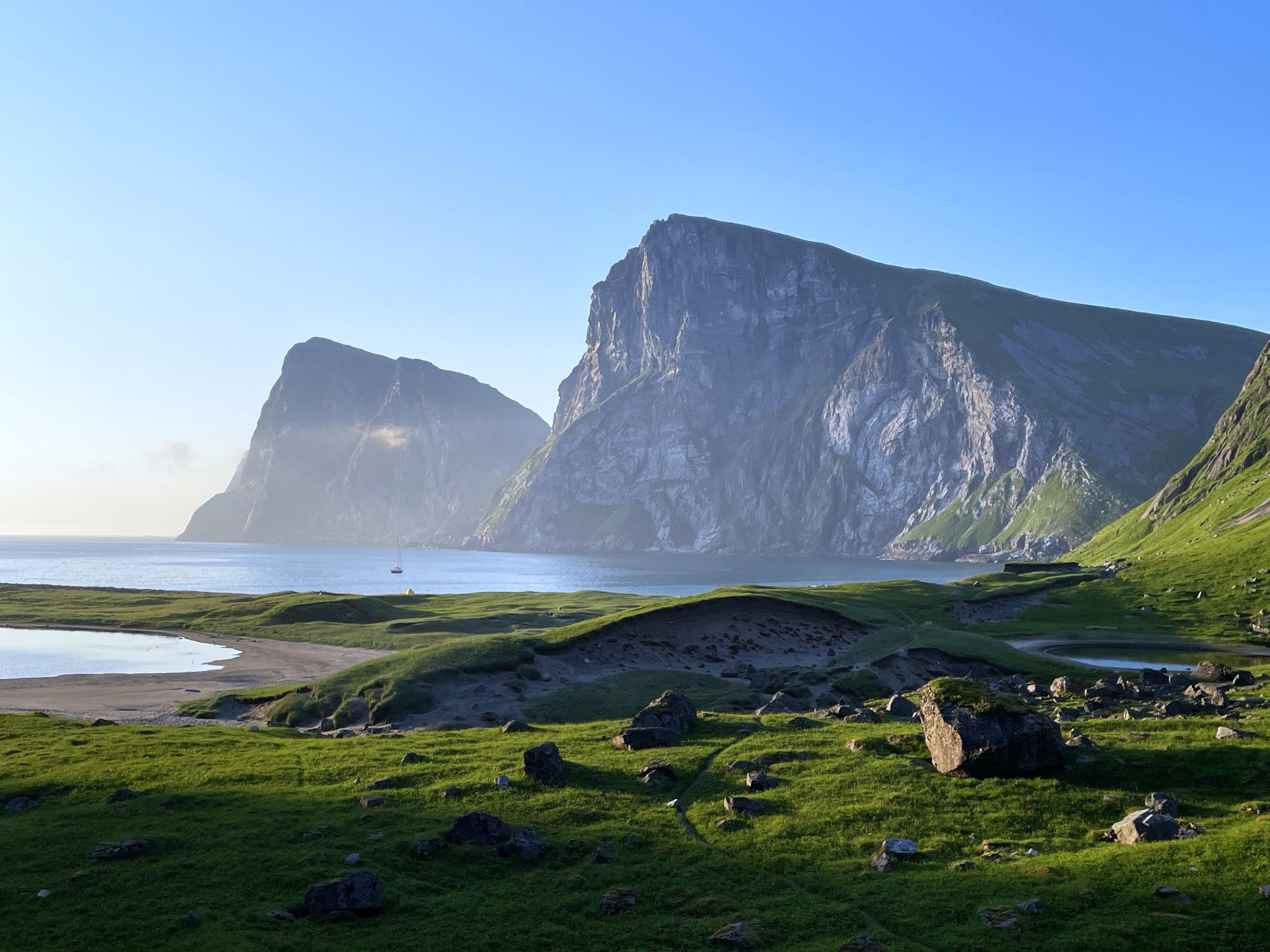
Shaking off the shock of this most beautiful of sights, we simply gave the Brit a knowing nod as he continued to stare reverently at the scene before seeming to remember his camera at his side.
As rugged as the approach was, the descent was gentle, down through green grass and white wildflowers until finally, at the bottom, the green grass was overtaken by the beach sand.
The Arctic surf boomed in our ears now, and the white foam and mist advanced and retreated on the other side of a hundred meters of sand. With shoes now removed, we ran across that beach and felt the exhilarating cold of surf two hundred miles above the Arctic Circle. That big, rich sun was not setting; it was drifting parallel to the horizon, just teasing a connection to the ocean before beginning its gradual rise again. We could have spent all night there, and one day I will return to this most beautiful of places to do just that.
As we turned to begin the three-mile return hike back over the spine of the island, a marine layer began to roll in, gracing the Gibraltars with skirts of white clouds. And, as we descended along the lakes back to the schoolhouse, a gigantic cloud wave poured beautiful and white over the saddle, drifting past and through us—like the surf of Vestervika Beach taking celestial form and forever enveloping my heart and soul.
Forever I will remember this most beautiful place in the world, Vestervika Beach.
To experience the scale of the cliffs and the sound of the surf at Vestervika, turn on your audio and watch this brief two-minute cinematic look at the trail: