

This article was published in Yellow Scene Magazine as my monthly outdoor column.
Coloradans are proud of our beloved “fourteeners,” and for good reason. Of the Rocky Mountain states, Colorado is the only one with any peaks topping fourteen thousand feet, and we officially have 53 of them based on the ranked summit criteria used by 14ers.com. From Longs to Pikes, Sunlight to Sunshine, and from the Front Range overlooking Denver to the rugged San Juans of Southern Colorado, our high peaks are legendary. And they are popular with climbers and hikers. Very popular.
Back in the late Twentieth Century, I climbed twenty fourteeners before I decided that even back then they were too crowded for my liking. These days, many of them have become so popular that just getting a parking spot close enough to the trailhead on a summer weekend might be a greater challenge than reaching the top, which will often be clogged with people taking turns getting their summit pictures.
It’s enough to cause long-time locals who love their wide-open western spaces to turn curmudgeon and claim our entire state has been overrun with “insta-selfie” nature lovers from California. Or Texas. Or wherever. But every crowded fourteener summit is surrounded by a sea of lonely peaks—those “lesser” summits falling just short of fourteen-thousand-foot fame. No less scenic or challenging, they are far less trodden upon. I’m talking about the 583 “thirteeners” and 681 “twelvers” in Colorado.
According to the Colorado Fourteeners Initiative, Colorado’s fourteeners absorbed the boot prints of 256,000 climbers and hikers in 2025. A single summer Saturday might bring 1,000 people just to Quandary Peak alone, making for a constant stream of peak baggers from trailhead to summit and back. Meanwhile there’s a big thirteener just to the south of Quandary called North Star Mountain, topping out at 13,614 feet. North Star is a class-two walk-up from the top of paved Hoosier Pass—easy to get to with a similar difficulty level. On that same Saturday there might be two or three hiking parties heading for the summit, and that’s a relatively high level of use compared to most other Colorado twelvers and thirteeners.
A grand total of seven individuals have reached the summits of all 1,264 official Colorado peaks between 12,000 and 13,999 feet. This vast collection of mountains range from the most remote to the most accessible, and from mild walk-ups, like 13,129-foot Mount Flora off of Berthoud Pass, to near impossible technical ascents like rarely summited 13,112-foot Lizard Head near Telluride. Ten times more humans have stood atop Mount Everest than have summitted Colorado’s terrifying Lizard Head.
Fourteeners also do not surpass the “lesser peaks” in beauty, ruggedness, or uniqueness. Few fourteeners can compare to the sheer verticality of Vestal Peak (13,874 feet) deep in the San Juans. There’s Bison Peak (12,432 feet) in the Lost Creek Wilderness, one of the most unique mountains in the state with an otherworldly rock formation landscape on the approach. And what about the Spanish Peaks—the twin summits dominating the horizon from the Southern Colorado plains? In terms of base-to-summit relief, West Spanish Peak (13,584) is a far larger mountain than many of our fourteeners including our highest, Mount Elbert, but sees only 10% of Elbert’s hiker traffic.
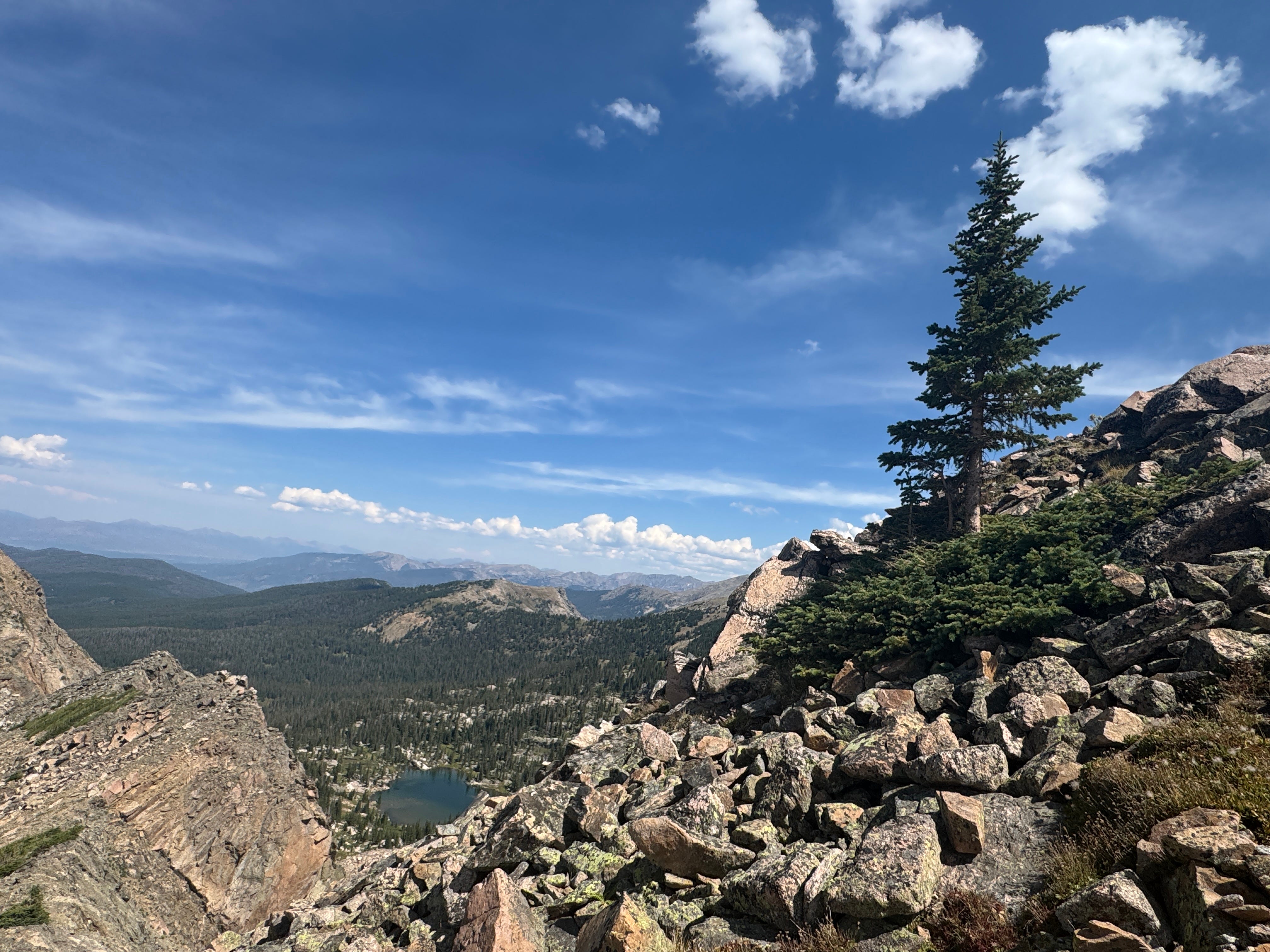
When climbing these “lesser peaks” you might see a person or two, or you might not. There might be a car or two at the trailhead, or maybe your approach requires a random pullout on the side of a Forest Service Road somewhere. Or maybe, in the case of Mount Neva, you’ll start at a popular trailhead, but continue past the primary destination (Caribou Lake) and have the entire peak to yourself with only the many resident marmots to keep you company.
Last year, I climbed Mount Neva (12,849 feet), partly because it is named after Chief Niwot’s brother, a fascinating and mysterious figure of our local Native history. But I also climbed it for the opportunity of solitude on a peak so close to Denver. I was the only human on the mountain that summer Saturday. The last, trailless mile requires a class two-plus scramble steeply up the northwest ridge. The views from Neva’s summit are as good or better than any of the fourteeners I climbed last century. From a blocky summit perch, the rugged Indian Peaks sweep to the north towards the larger massif of Longs Peak in the distance, and blue alpine lakes hide in the cirques below on both sides of the Continental Divide.
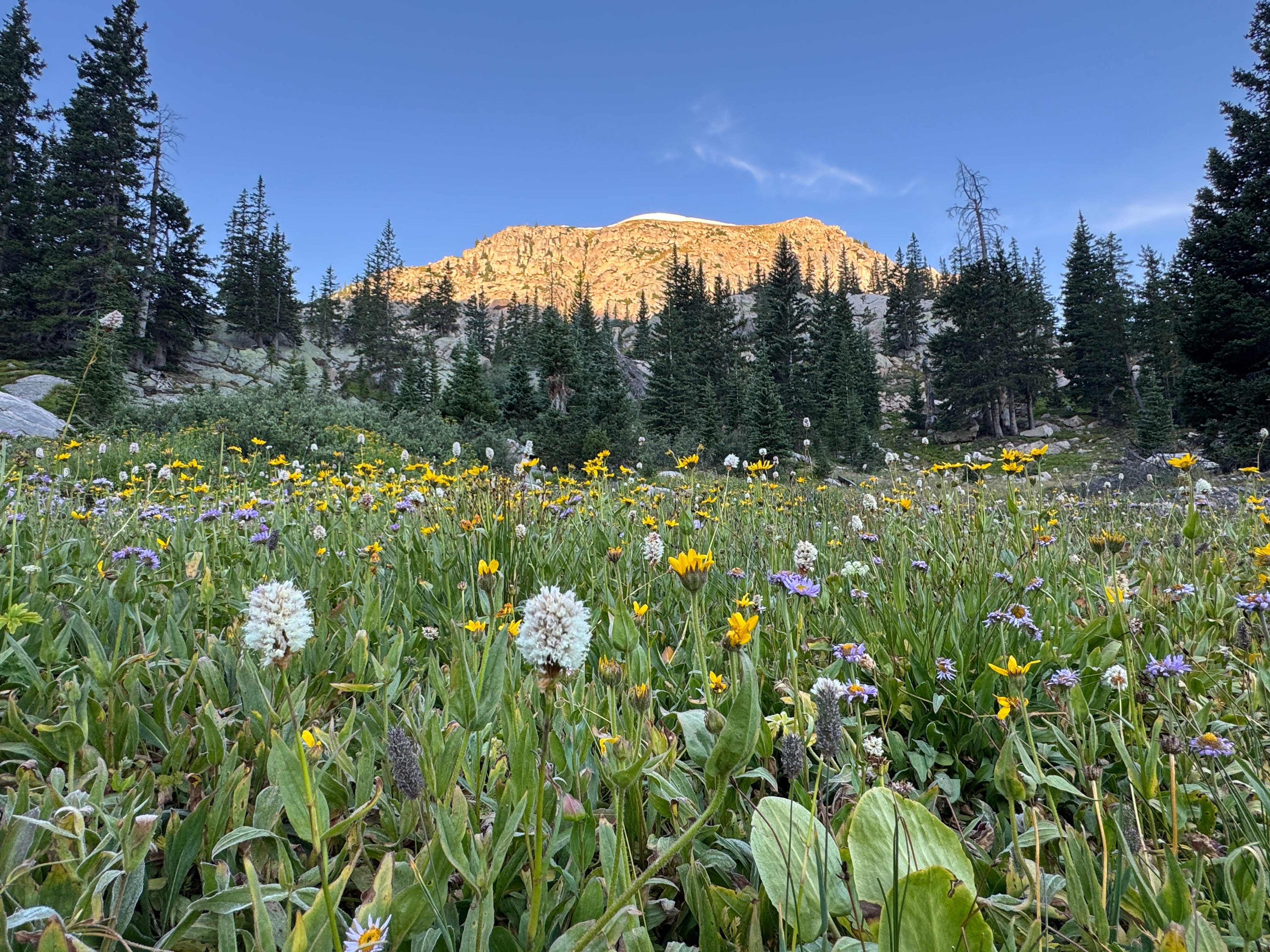
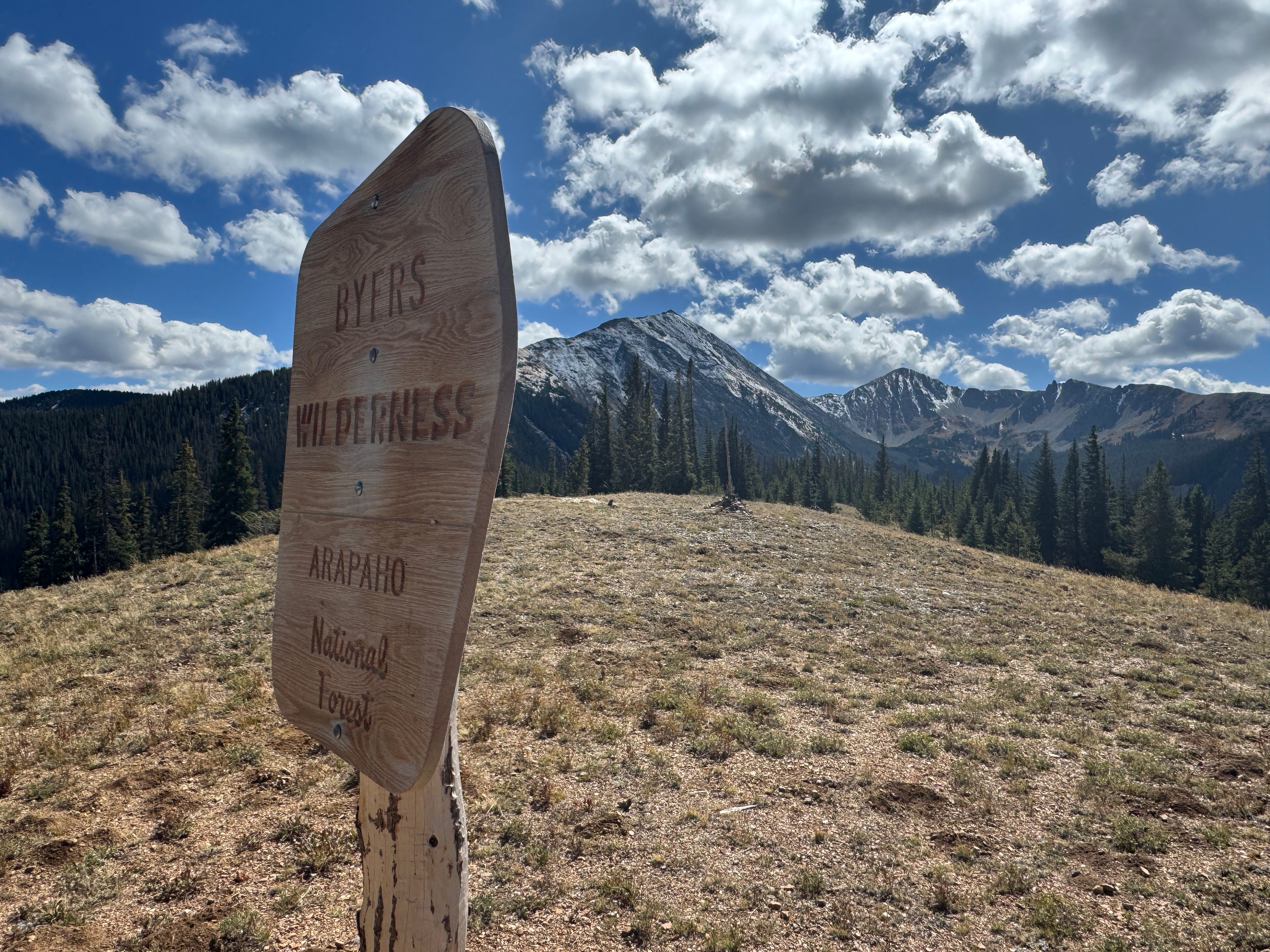
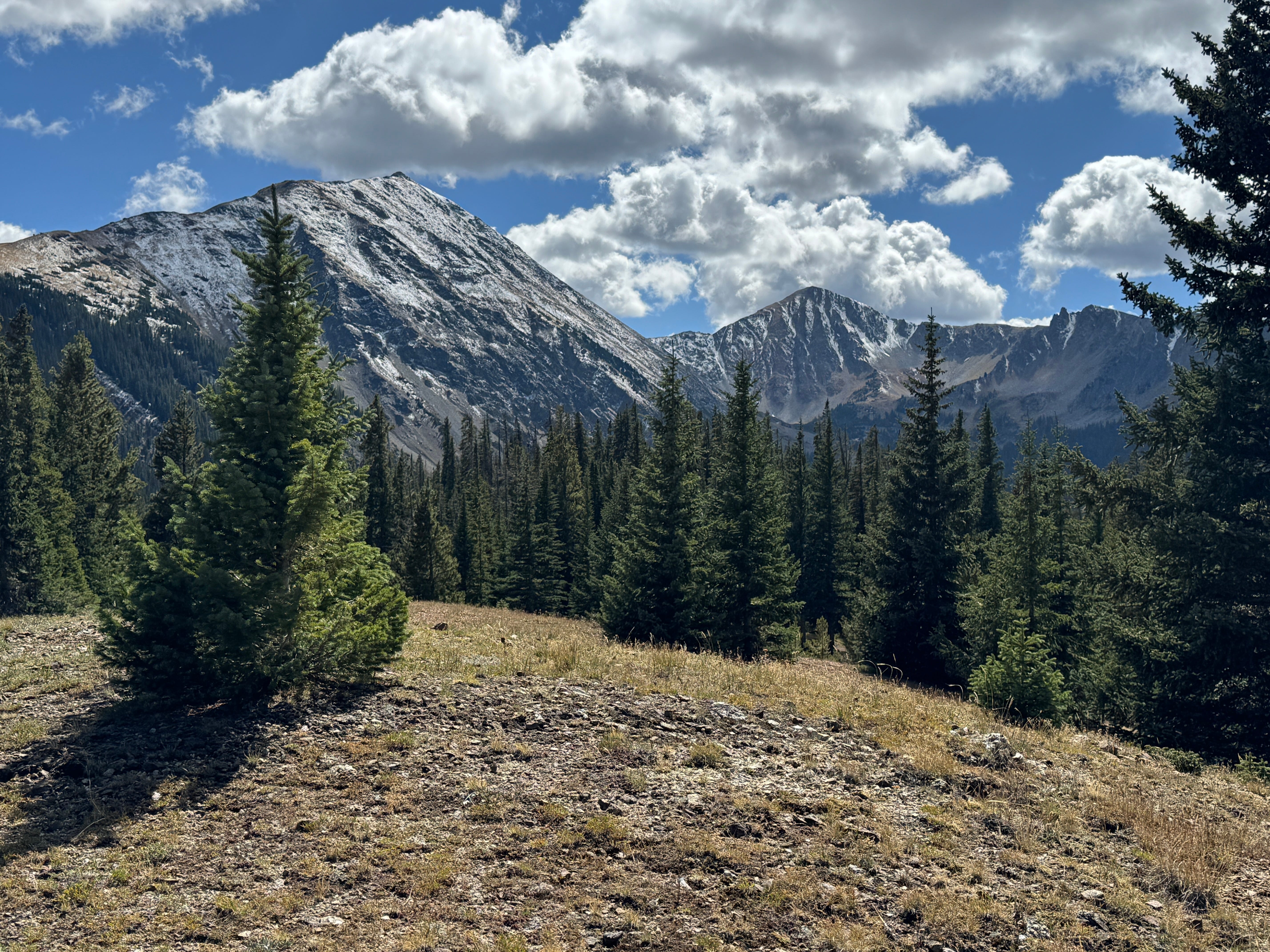
Still craving solitude a week later, I set out for a double summit of Bills (12,702 feet) and Byers Peaks (12,804 feet) in the Byers Peak Wilderness, choosing a ten-mile counter-clockwise loop that few people, it seems, have actually done. It’s not that it’s a particularly daunting route, it’s just that most people don’t think to do it, instead heading for the same packed fourteener trailheads or popular routes described on their All Trails app.
I started that hike in a crisp 28-degree dawn with a dusting of September snow on the pines. There were wild ptarmigans and feline tracks, mist rising from Lake Evelyn, and a cloud layer below me in the Fraser Valley. There was silence, swirling clouds, and big views of mountains near and far. But there were no other people. Not one other soul stood on those summits, or zigzagged in the distance along that snow-dusted ridgeline. It was the simultaneous elation of freedom and the slight tinge of fear only found in wildland solitude.
Of course, there’s nothing wrong with climbing a crowded fourteener just to say you’ve done it. And there’s something to be said for the camaraderie that can be found among like-minded adventurers on the trail. But, if you find yourself lamenting the lack of available trailhead parking and the selfie stick carrying crowds of popular fourteeners, just remember: In Colorado, just over that valley, there’s always a “lesser” peak, perhaps with better views, that no one has stood upon in days or weeks.