
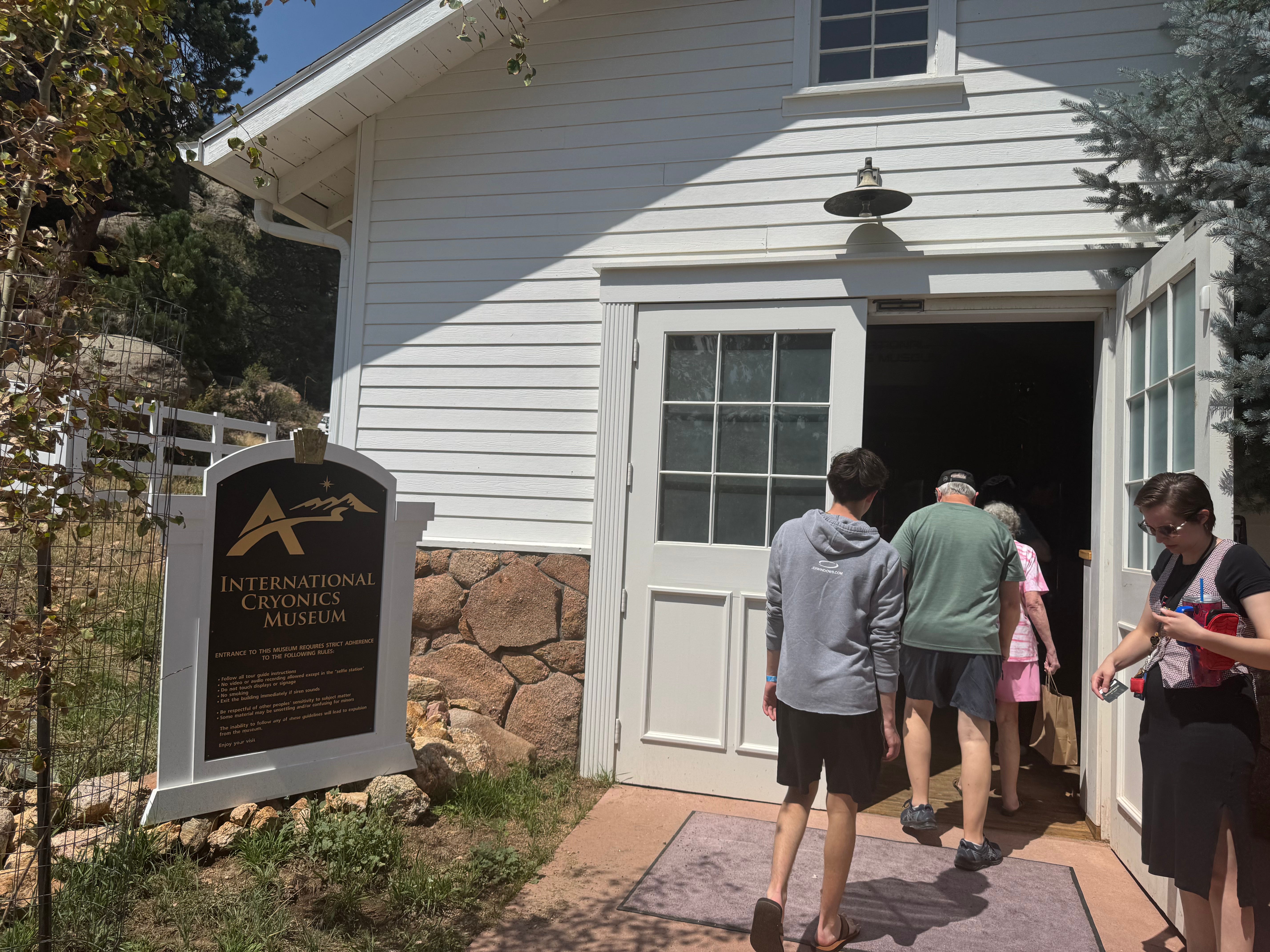
There he was. I couldn’t actually see his body. He was encased head-down and feet-up in a shiny futuristic capsule. It was the opposite of a proper burial—vertical, exposed, and on display at the so-called International Cryonics Museum in Estes Park, Colorado. I paid twenty bucks to see the dead guy as part of a tour.
The international museum is a one-room cabin—the former ice house at the historic Stanley Hotel. If you know about the Stanley Hotel, you’ll immediately recognize the irony of there being a frozen guy in their former ice house. If you don’t know, I’ll fill you in here: The Stanley Hotel is the setting for Stephen King’s book and movie The Shining, based on a haunted hotel that drives a writer (played brilliantly by Jack Nicholson) psychotic. In the final scene, our writer is frozen solid in a Colorado blizzard right outside the hotel—a frozen dead guy.
Exactly how the real frozen dead guy ended up on display in the one-room International Cryonics Museum at the reportedly haunted Stanley Hotel in Estes Park is a story too bizarre to possibly be true, except for the fact that it is, indeed, completely true. But, even stranger, and perhaps a bit unnerving, is my recent discovery of my own coincidental connection to the famous Frozen Dead Guy.
Bredo Morstøl was a typical Norwegian man. He loved the fjords and mountains of his beautiful homeland. His family owned some mountain property just up valley from the head of one of those fjords somewhere along the central Norwegian coast, a long way from Oslo and well north of Bergen.
The story goes that, at the age of ninety, sometime in the year 1989, Bredo, still active and vibrant, had returned to the cabin after some mountain sauntering. Over evening conversation with family, they got to talking about the idea of getting oneself frozen after death for future revival.
Not long after that family discussion, Bredo Morstøl croaked right there in the Norwegian countryside. Without Bredo’s living consent, his grandson Trygve Bauge, a life extension fanatic like an early Wim Hof, quickly got to work putting his dead grandfather on ice—a now-or-never opportunity, one supposes.
Somehow Trygve managed to get his freshly frozen dead grandfather packed up as cargo and shipped to California, where he was temporarily entombed in a liquid nitrogen chamber provided by the cryonics company Trans Time, where he stayed for four years. But this was an interim station for Grandpa. Trygve had plans to start his own homegrown cryonics company—a DIY affair in the hills above the small town of Nederland, Colorado, where his mother, and Bredo Morstøl’s daughter, Aud Morstøl, owned a small property.
The first of many problems with that plan is that Trygve and his mother didn’t tell the town about it and did not apply for any business licensing or zoning permits for such a venture. Grandpa and his cryonic tomb were simply packed in dry ice and locked away in a common Tuff Shed—the type most people use for their garden tools.
The second problem is that the home on the property itself was only partially constructed and was in violation of local zoning and building regulations even as a standard residence.
The first hammer fell on Trygve’s audacious plan when he was deported back to Norway for overstaying his visa. The second hammer dropped when Aud was entered into an eviction process for those zoning and permitting violations. In a panic, Aud spilled the beans about her frozen father, worried about who would top up the dry ice to prevent the body from thawing.
This caused an uproar with the Nederland city council, catching the small community completely off-guard. Of course, there were no specific laws on the books in Nederland (or Boulder County, Colorado) addressing the possibility of residents cryonically preserving dead relatives in their backyards. So, the first thing the town did was pass a law prohibiting such activity—a modern-day example of peculiar reactionary lawmaking that leads to bathroom reader material about hilarious legal oddities. For example, just up the road from Nederland in the even stranger hippie commune of Ward, it is said that it’s illegal to own a billiard hall, but only if your name is Steve. I wonder what the heck “Steve” did to deserve that?
The legal issue wasn’t going to resolve the fact that the town now had a frozen dead guy on their hands, so they did the most sensible thing: They grandfathered the grandfather. Frozen Bredo could stay put in his Tuff Shed so long as the family could find a caretaker to keep him on ice.
Locals stepped up to the plate, coordinating with a now-exiled Trygve in Norway for payment. They made runs down to Denver to pick up hundreds of pounds of dry ice at a time and transport it up to Bredo’s shed, at times loading the ice onto sleds during winter blizzards for the final stretch to the Tuff shed—as reliable as the U.S. Postal Service.
As word spread through the town about the frozen dead guy up the hill, curiosity took hold, and people started to realize the opportunity. In 2002, the first annual Frozen Dead Guy Days was held in the small town of Nederland. People came from all around for the coffin races, frozen turkey bowling, and polar plunges in Barker Reservoir. VIP fair-goers could even hitch a ride up to see Bredo’s frozen tomb in the shed and drink a customary toast with the dead guy.
The festival was a hit and, over the years, grew more popular. A major radio station even donated a new, nicer Tuff Shed for Grandpa, as Bredo became known to the town. Murals of a frozen old guy started appearing on storefront walls.
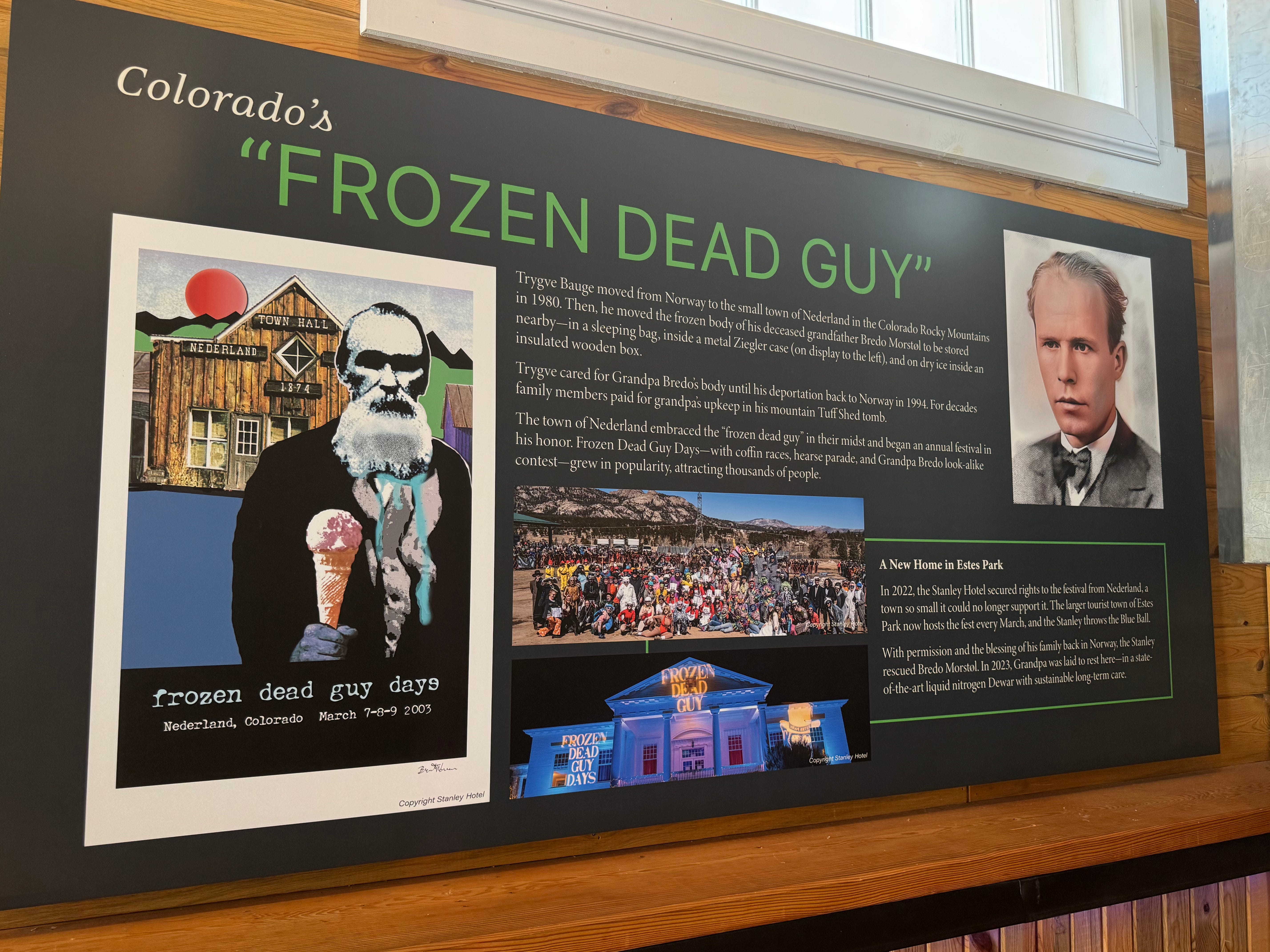
After twenty years of revelry, Frozen Dead Guy Days outgrew the capacity of little Nederland to handle the crowds. That’s when the big money from Estes Park and the Stanley Hotel kicked in, just a little way up the road. Estes Park was built as a tourist town, and the Stanley Hotel’s history was made for this.
But a Tuff Shed wasn’t going to cut it. They partnered with Alcor, a cryonics company based, ironically, in sizzling Scottsdale, Arizona. They converted the hotel’s old ice house into the new International Museum of Cryonics with Grandpa himself as the main attraction—his frozen tomb, called a dewar, displayed inside a protective glass cube like the Mona Lisa.
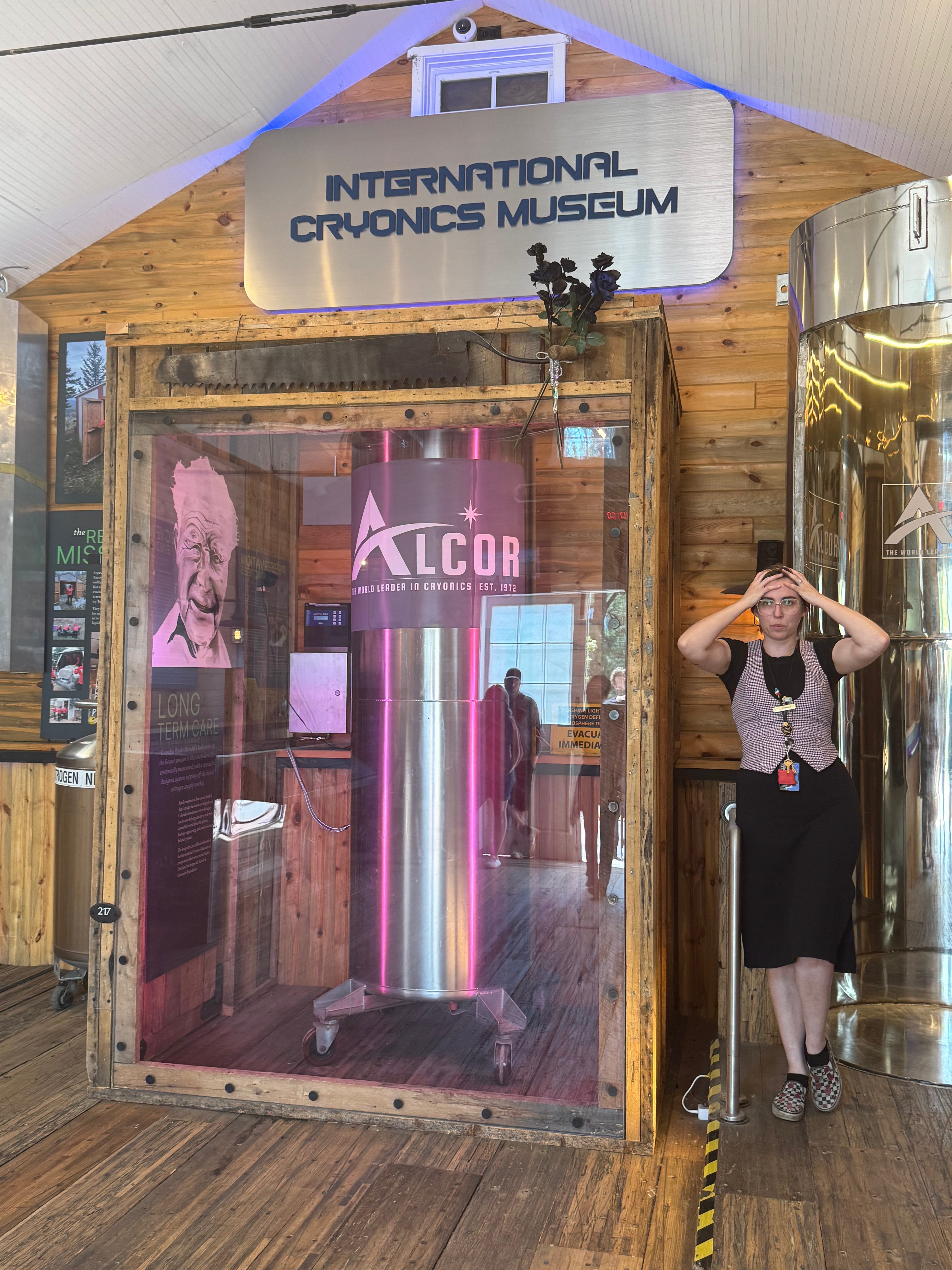
The tour was fascinating, if a bit morbid. A young man in the back had to excuse himself when the tour guide explained that most dewars can hold four bodies and nine heads. Heads? That’s right, a typical dewar contains four vertical bodies, stored head-down, and a sort of spinning colander-type contraption with dividers contains up to nine human heads above the feet of the whole bodies.
“Why would one freeze just their head?” I asked.
“The reasoning for most people,” said the tour guide, “is that it’s much cheaper at $80,000 compared to $240,000 for your whole body.” The rationale is also that, when the medical tech is ready to revive people, you will really only need your head as it will either be sewn onto a donor body, or more likely, a humanoid robot body.
Unlike the queasy young man who politely excused himself on the verge of dry-heaving, I was positively fascinated by the whole thing. I’m pretty sure I would never put cryonic preservation on my Christmas list. But, the science of human longevity fascinates me.
That’s why I was taken aback a little when the tour guide said that, if Alcor wanted to, they could revive cryonically preserved humans today. Wait... What? Frozen people who died years ago could be revived today and literally come back to life?
This, apparently, has already been demonstrated with other life forms. And, not only can a clinically dead cryonically preserved life be resurrected, that life can have memory of its past life. Way back in the 1950s, scientists Dr. Audrey Smith and James Lovelock trained some hamsters to solve a maze, then froze them in super-cooled water. Upon reanimation in, basically, an early microwave oven, the hamsters not only revived, but they solved their maze, demonstrating that memory is preserved in the structure of the brain even after freezing it. Additional similar studies were done with different types of worms and mice in the ensuing decades, each one showing that a previously frozen reanimated brain picked up where it left off as if waking from a deep sleep.
So, why aren’t cryonically frozen humans being reanimated yet? The reason is because there’s a more difficult challenge to solve. Unlike the science experiments where perfectly healthy life forms were deliberately frozen, cryonically preserved humans died of a cause like heart disease, Alzheimer’s, or cancer. Resurrecting them now would only return them to their disease-ridden states just before they died. They wouldn’t last long.
Before reanimating people, we must not only have immediate cures for the diseases they succumbed to, but likely also age reversal capabilities. After all, any smart person choosing to be cryonically preserved would never want to be resurrected as a ninety-year-old on their deathbed only to go through the dying process again. No, they would want to be resurrected as they were in their younger form. That’s going to take some time.
Seeing Bredo trapped in that contraption made me wonder about the home he left behind in Norway. He was from a small village called Isfjorden. The name sounded really familiar. Initially, I mistakenly thought it was the fjord-side town that inspired the animated setting for the movie Frozen. But, when I looked it up on the map, I almost cryonically froze myself in my chair. Isfjorden was one of a handful of Norwegian villages my family and I stayed in during a 2023 Nordic European vacation.
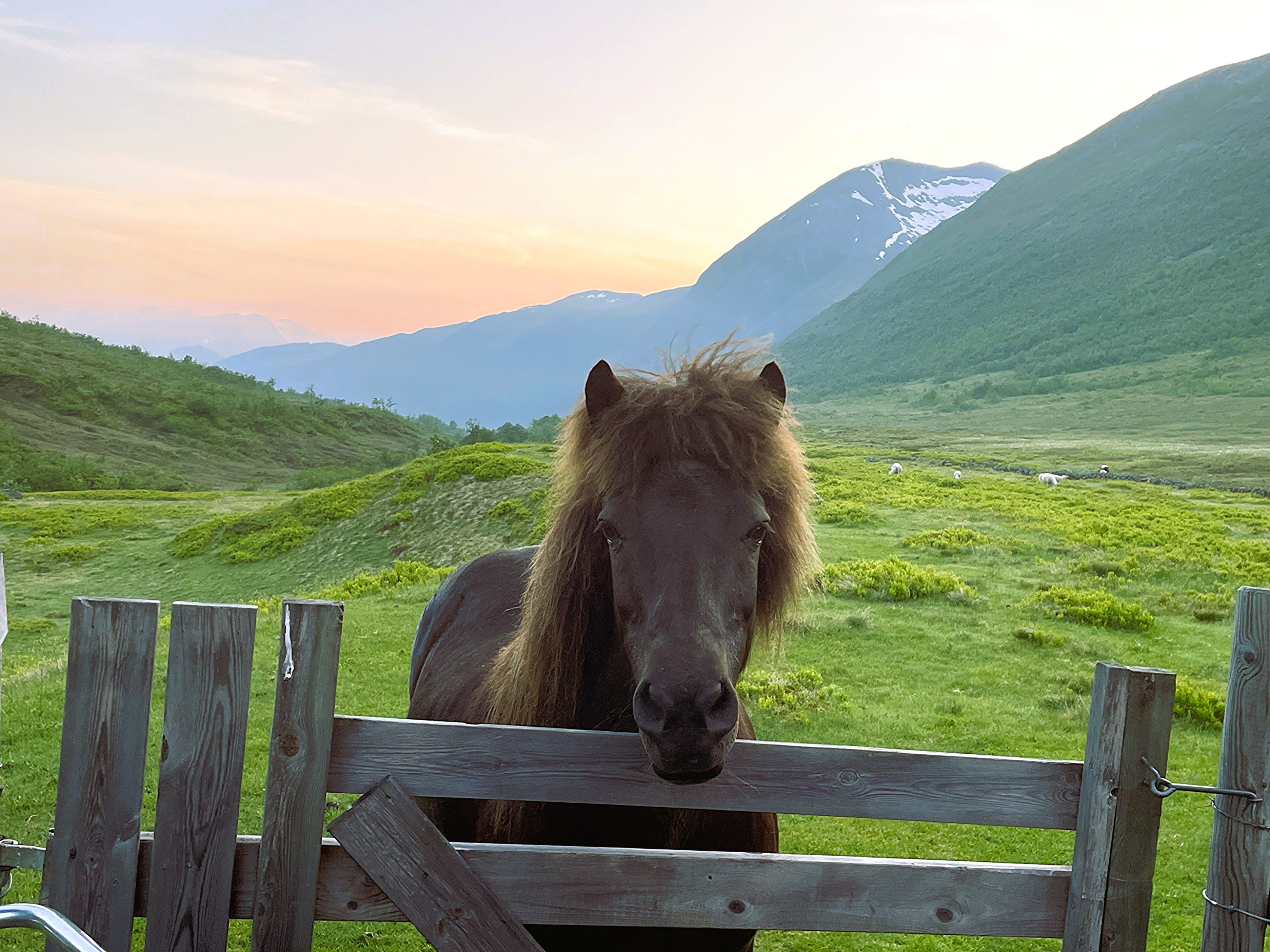
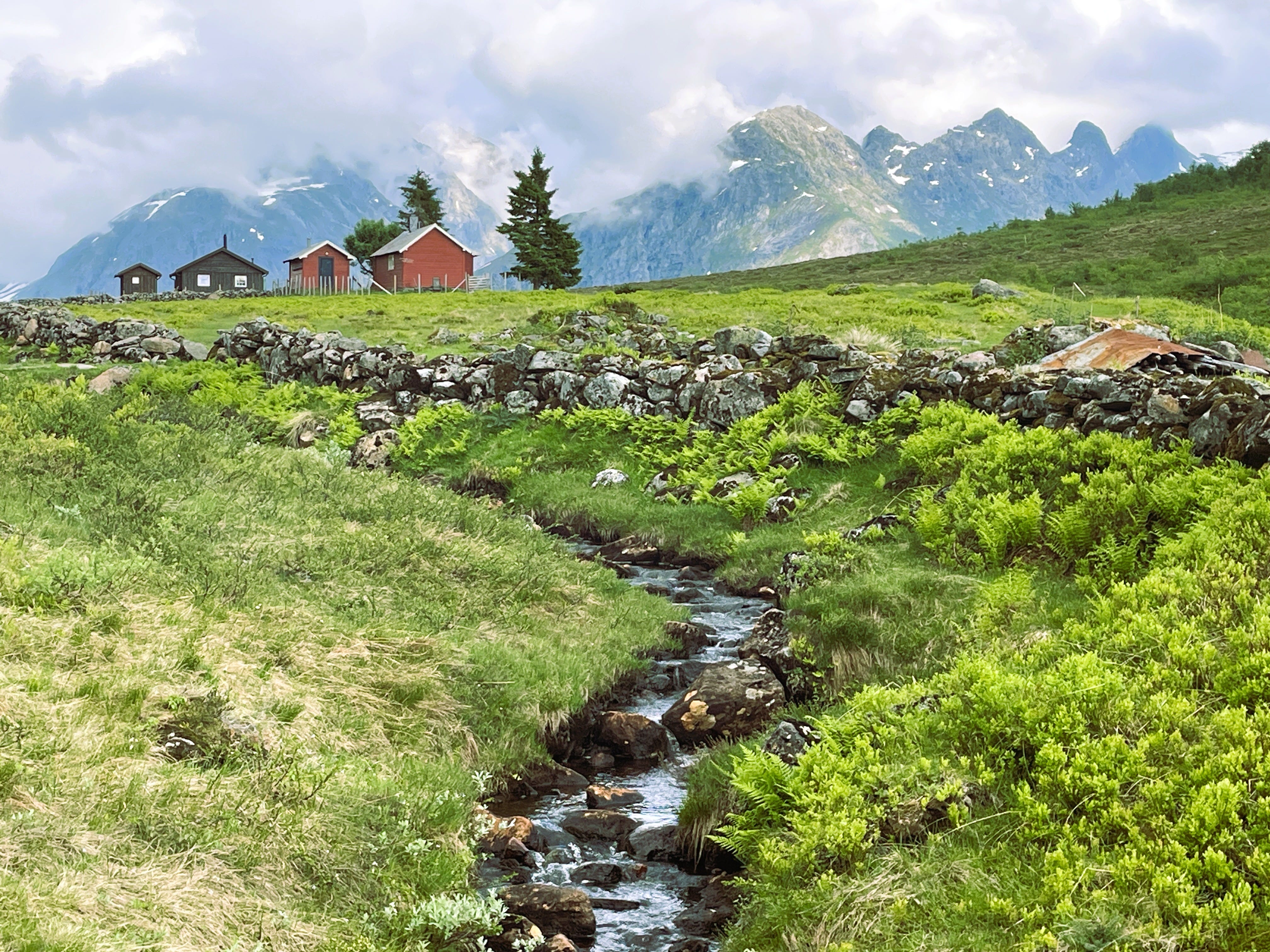
Well, we didn’t actually stay in the village, but in a remote cabin a few kilometers up valley from the village. It was a stunningly beautiful place—almost mystical. We had to park the car and walk the final kilometer to the cabin where we were greeted by three majestic horses. Ancient low stone walls outlined plots of land harboring little red country houses. A flower-and-rock-bordered brook gurgled through the middle.
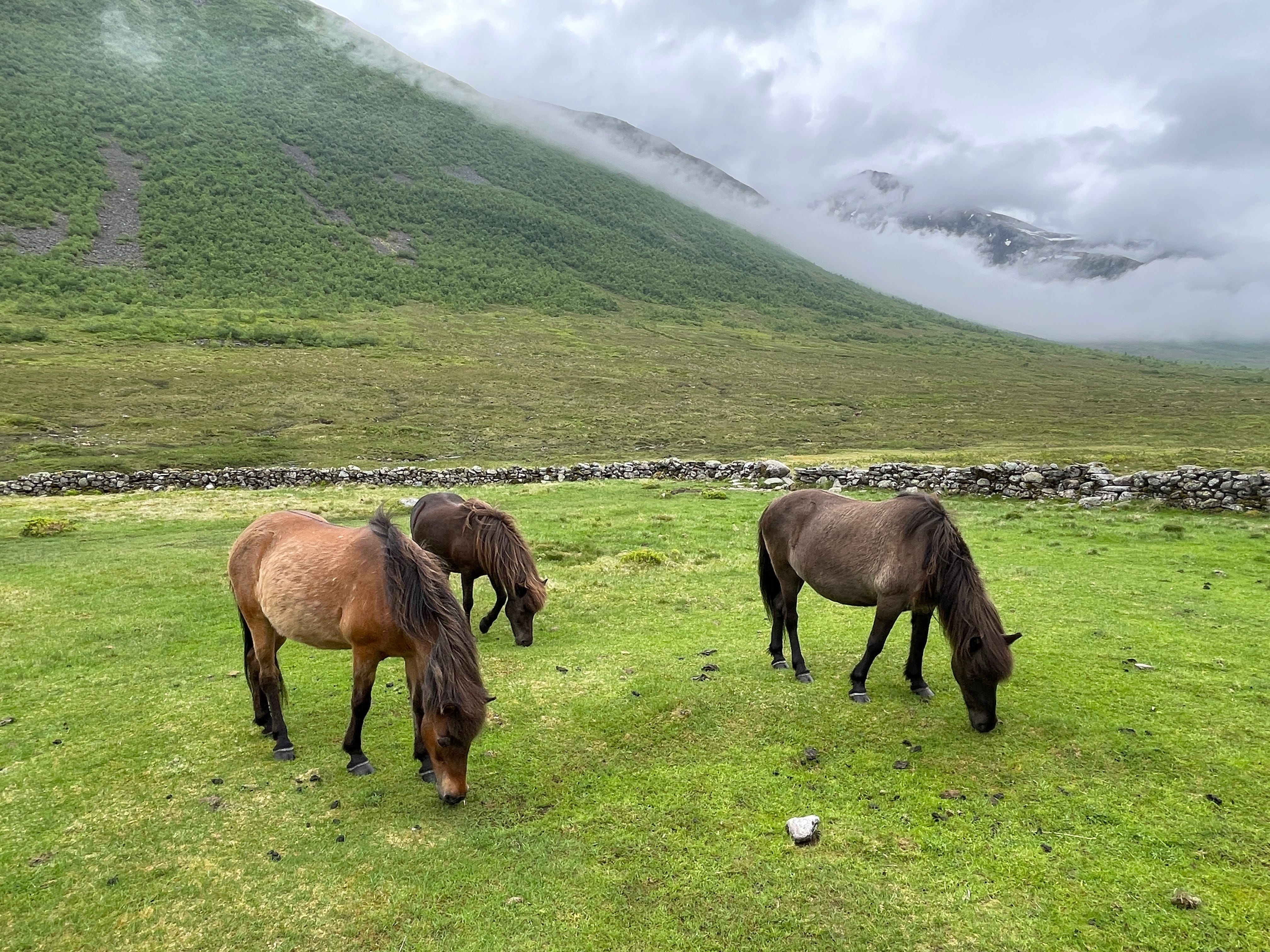
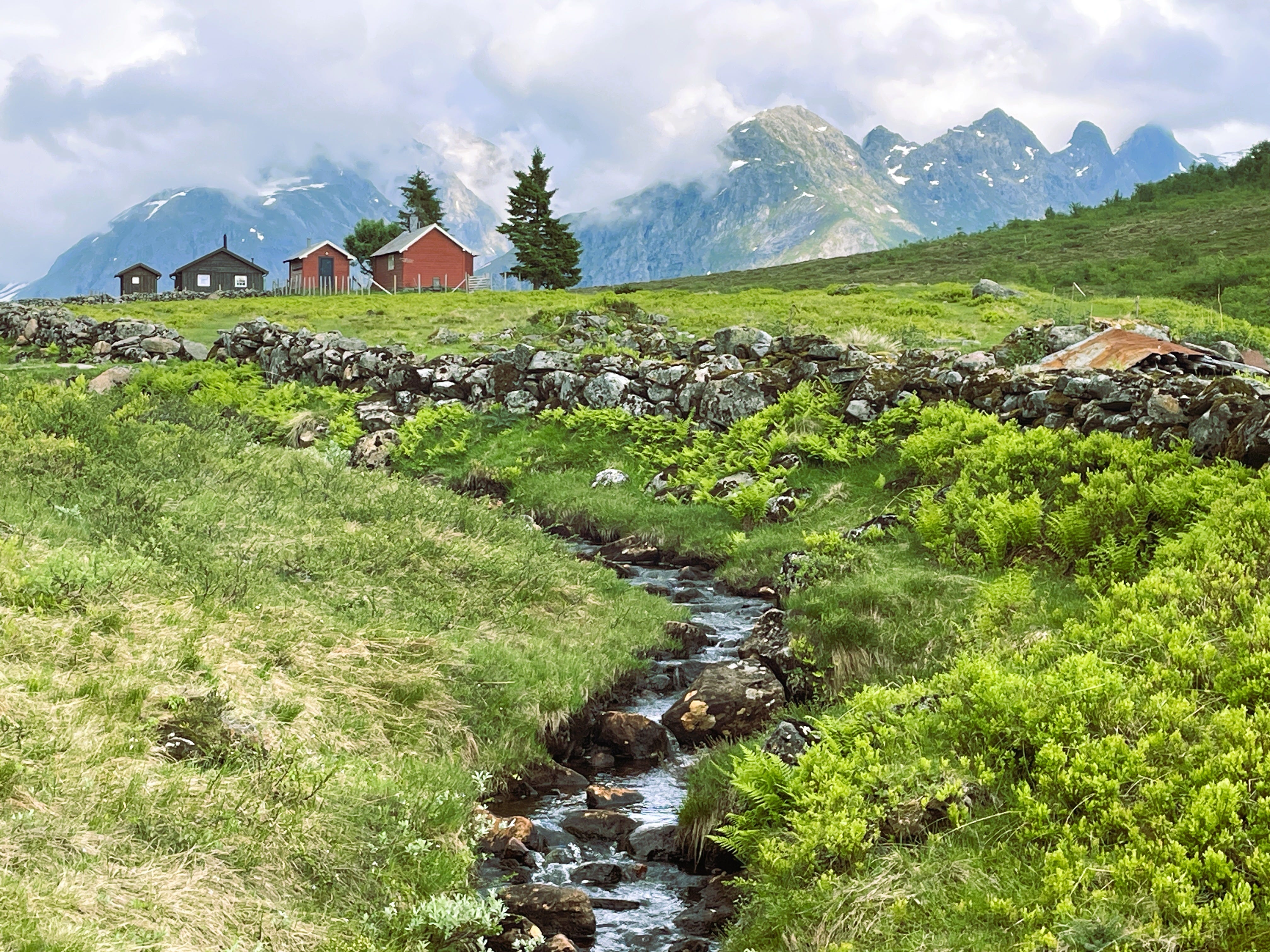
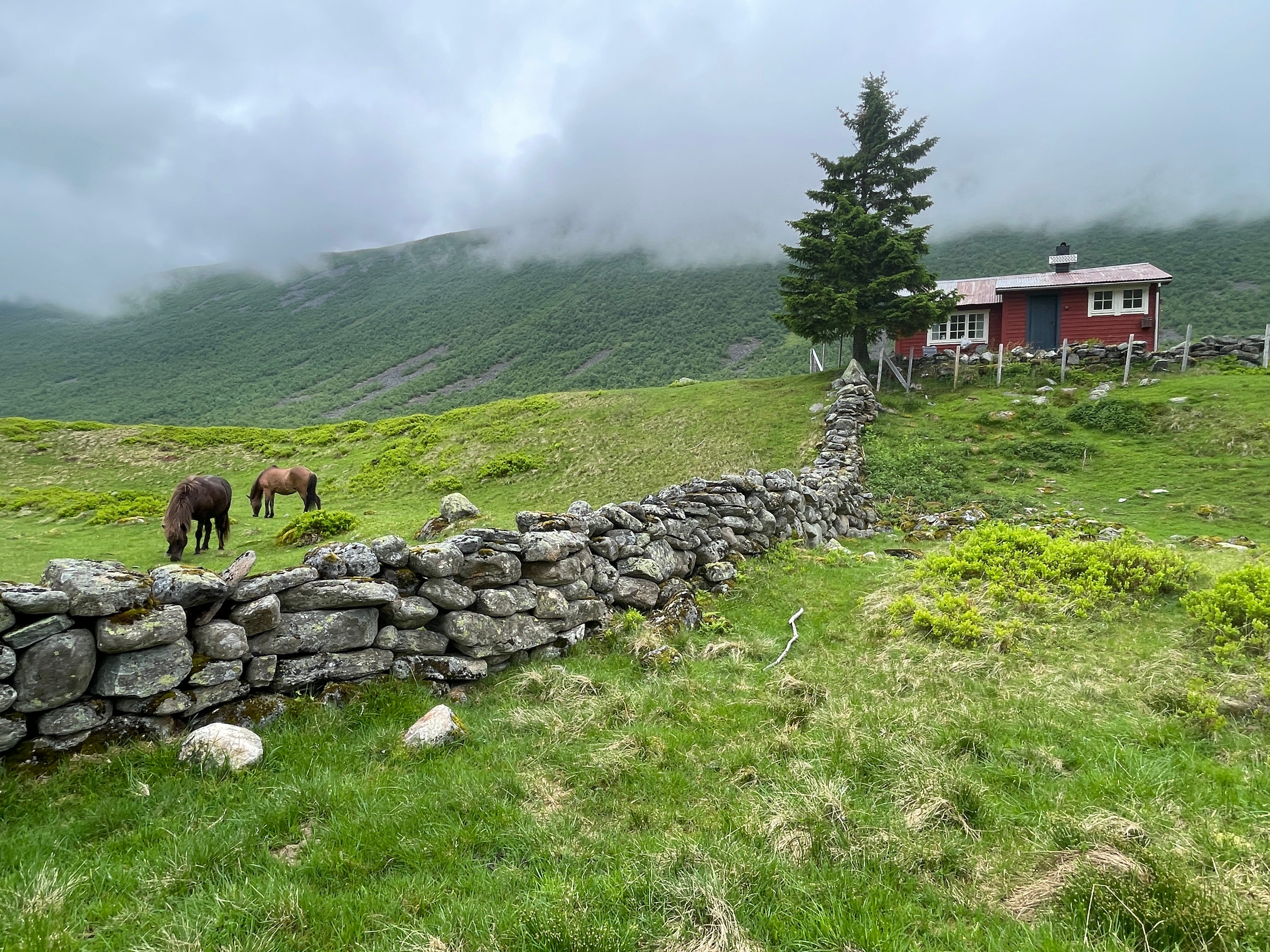
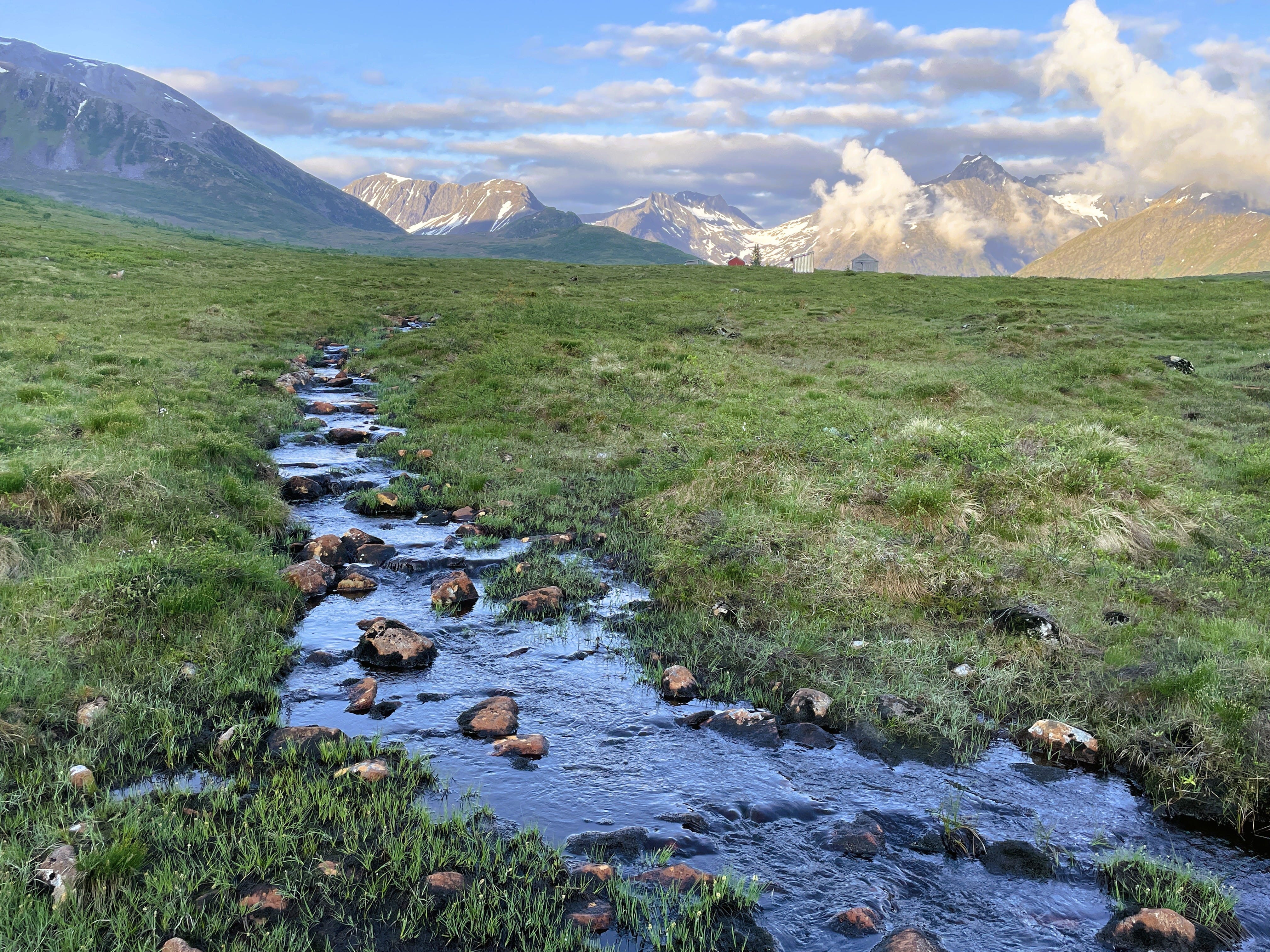
I zoomed in on the map, and to my astonishment, there was the name Morstøl in at least two different places right there in that valley. A little more research and I discovered that, indeed, Grandpa Bredo Morstøl’s family owned land in that valley—a family ski and hiking retreat in the beautiful Norwegian landscape. It’s even possible that the very cabin we stayed in may have been owned—may still be owned—by the Morstøl family, since my research indicates that the land in the entire valley was originally owned only by three families, the Morstøls being one.
Is it possible that we stayed in the same exact cabin where Bredo Morstøl casually expressed his curiosity about cryonic preservation just days or weeks before his peaceful death? The answer to that question may come in a follow-up piece. For now, I’m left pondering the strangeness of life in every way. The strangeness of a person making a decision about whether to freeze their whole body or just their head. The strangeness of Trygve Bauge’s delusional plans to create a secret cryonics facility in a smalltown Colorado backyard using his own dead grandfather as the first subject. The strangeness of a whole festival being created around that frozen dead guy, and the strange irony of the frozen dead guy being moved to the Stanley Hotel, a place known as the setting for a movie that closes with a scene of a frozen dead guy. And then, the personal strangeness of discovering my own highly unlikely potential connection to Grandpa Bredo Morstøl myself.
Life is beautifully strange.