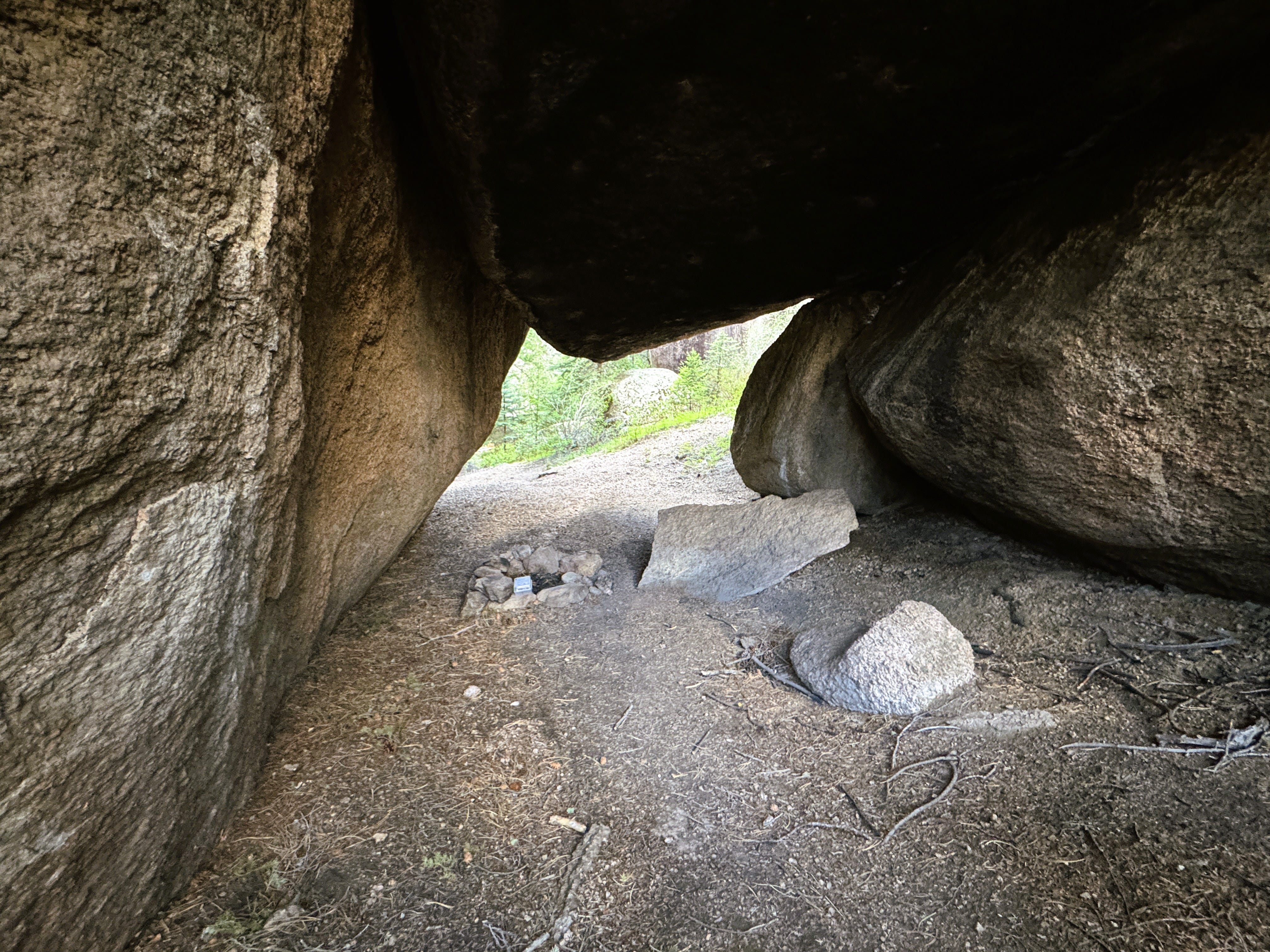

My daughter and I are standing inside a subterranean room five miles from the car, which is parked at the end of a very long dirt road. It’s not technically a cave, but it feels like one. A monstrous rock the size of a house is overhead, perched on other rocks the size of buses and trucks in just such a way as to form this secret chamber we find ourselves in.
I only spotted the cave because I happened to glance to the side of the trail and noticed a waist-high opening in the rocks to my left. Inside the cavern we find ourselves exploring a living room with a flat dirt floor, large rock-lined fire pit, and natural stone benches and tables. There are no signs or markers—no place name to affix to this cave and no marking on the map indicating its location. That’s because there are likely hundreds of hideaways like this in the area—a land of colossal boulders, stone passageways, monolithic towers, and serene rock gardens.
This is Colorado’s Lost Creek Wilderness. People wanted to flood this place back in the 1890s. Had they succeeded, these hidden worlds would have been lost to society—submerged like Glen Canyon. Fortunately, the effort failed, and more than a half-century after the dam builders gave up, the Lost Creek Wilderness was protected in 1980, not for reservoir building, but for its extraordinary intrinsic value as one of Colorado’s most unique natural landscapes.
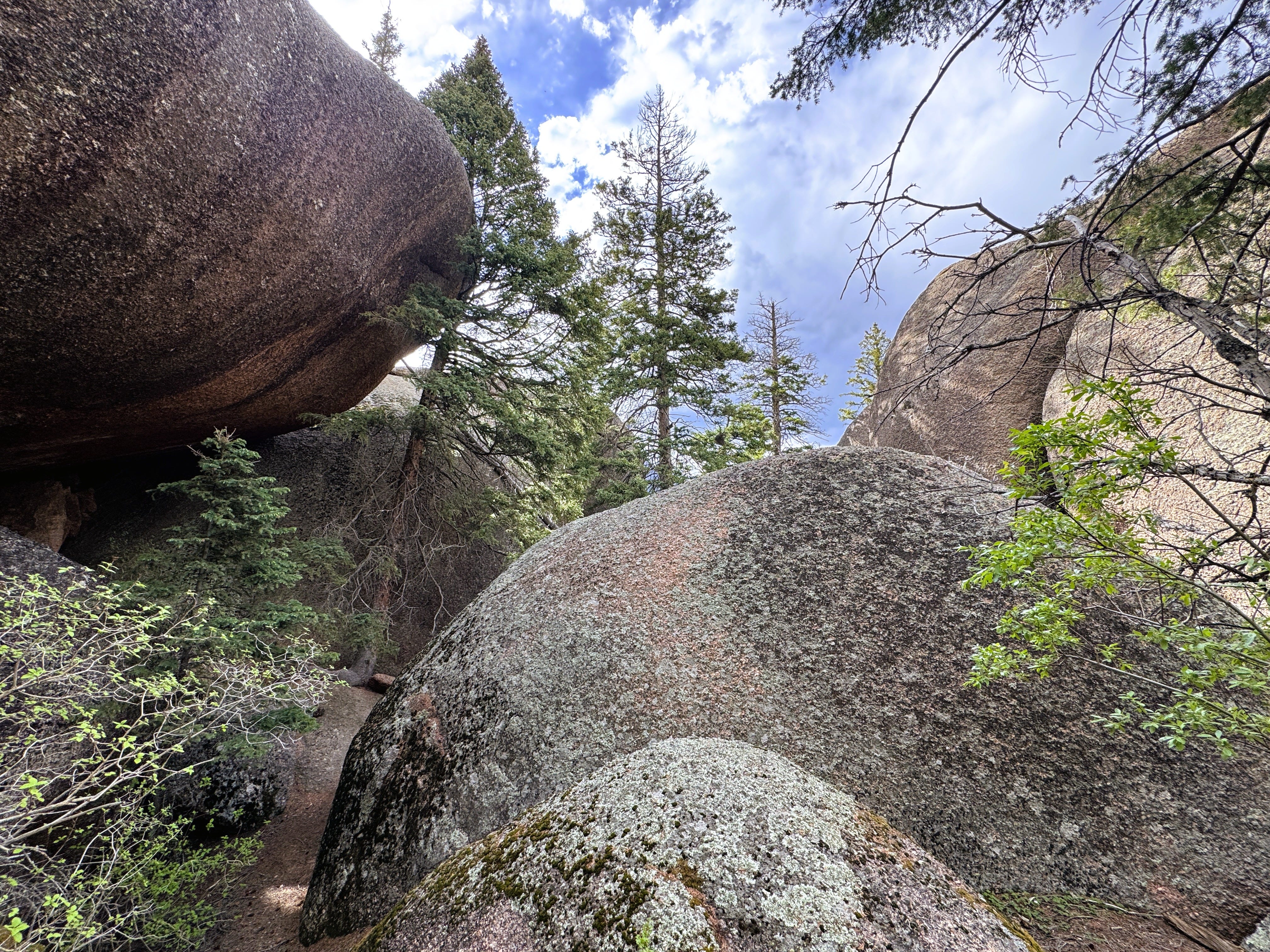
Today, the Lost Creek Wilderness covers almost 115,000 acres just to the southwest of Denver. It is certainly not what many people envision when they think of the Colorado Rockies. While the Lost Creek Wilderness is certainly rugged, it lacks the sweeping high alpine expanses typical of Colorado wilderness, and harbors no lakes. Instead, it offers a mysterious, more intimate, backcountry experience where poking around reveals all manner of giant stone formations—monster domes, towers, ramps, and places where the broken slabs and boulders have fallen and weathered in such ways as to form hidden passages, caves, roofs, and grottos.
Note to readers: If you would like to see a video of our hike and these sites, check out my YouTube.
It wasn’t for a lack of effort that the dam project failed spectacularly. Engineers with the so-called Lost Park Reservoir Project devised what could only be described today as a harebrained, but ambitious scheme to create a massive reservoir through some very unconventional means and with little to no regard for the natural wonder they would be obliterating in the process if successful.
Disappearing streams and rivers are not particularly uncommon in certain parts of the world, especially in areas of limestone karst geology. Colorado is not, however, known for this particular type of geology. So, the idea of a disappearing stream in Colorado is very much a novelty, and it’s still surprising that the Lost Creek doesn’t generate more attention.
Perhaps that’s because it’s not easy to find. The Lost Creek doesn’t flow through limestone karst, but it vanishes underground nevertheless—at least nine times—before finally emerging as Goose Creek. The Lost Creek Wilderness area is a massive igneous batholith that has been fractured and weathered through the eons to create a labyrinth of fascinating rock-bound nooks and crannies. Through this land of broken boulders, water flows at times under massive dogpiles of ancient boulders ranging in size from Volkswagens to stadium domes and bigger.
The enterprising water engineers in the 1890s, observing that Lost Creek flowed deep underneath these colossuses, actually believed that they could use these massive boulders to do most of the work for them—that all they had to do was plug the gaps between them and the water would have nowhere to go but to flood the beautiful valley upstream.
After cutting roads, building worker housing, and hauling big machinery into the wilderness by mule-power, they got to work. Their efforts were relentless, but it was a complete failure. The subterranean Lost Creek doesn’t run through a single passageway, but instead through a honeycomb matrix of piled boulders and solid rock slabs. With each passage the engineers plugged, the water simply found another opening.
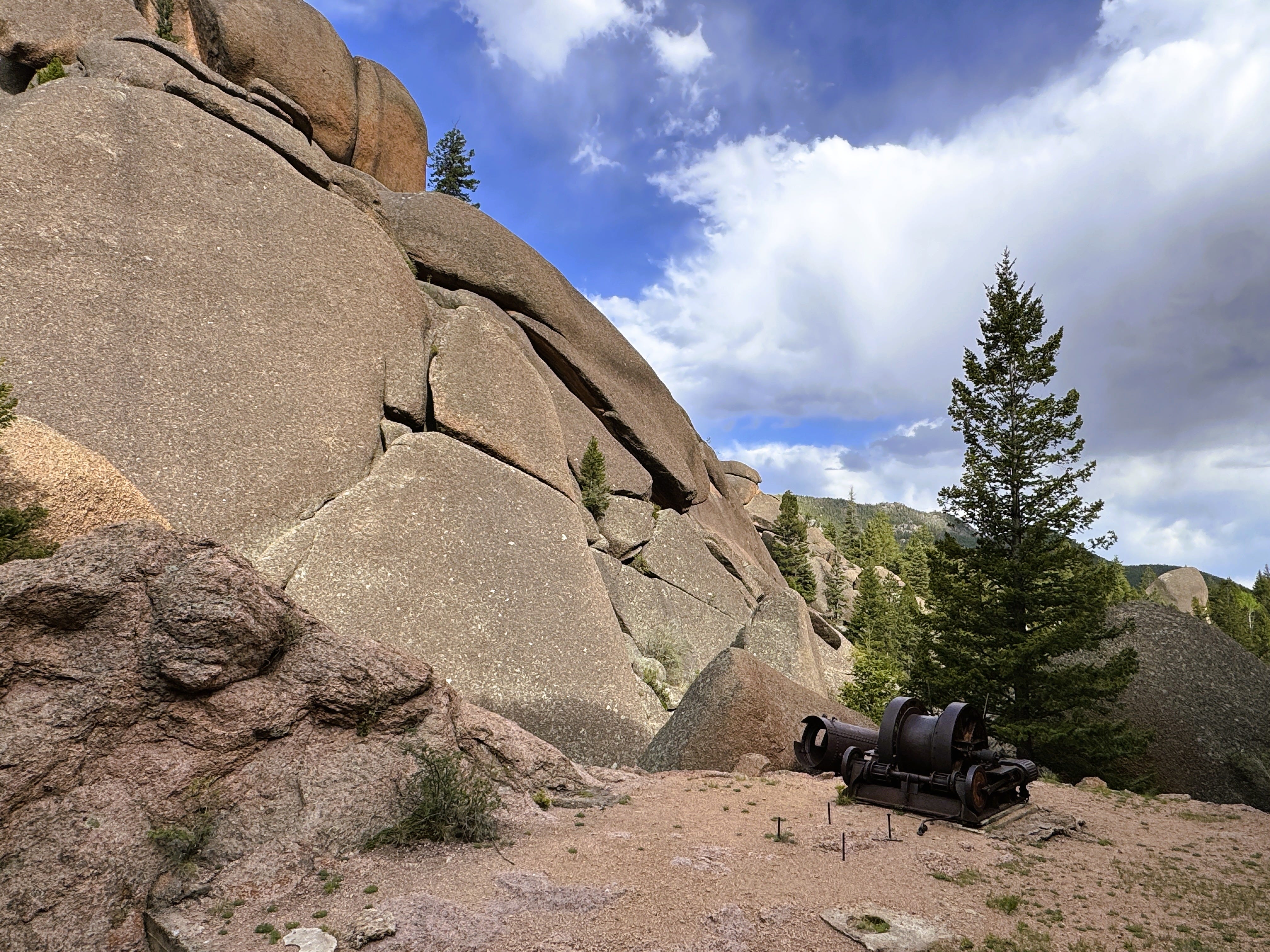
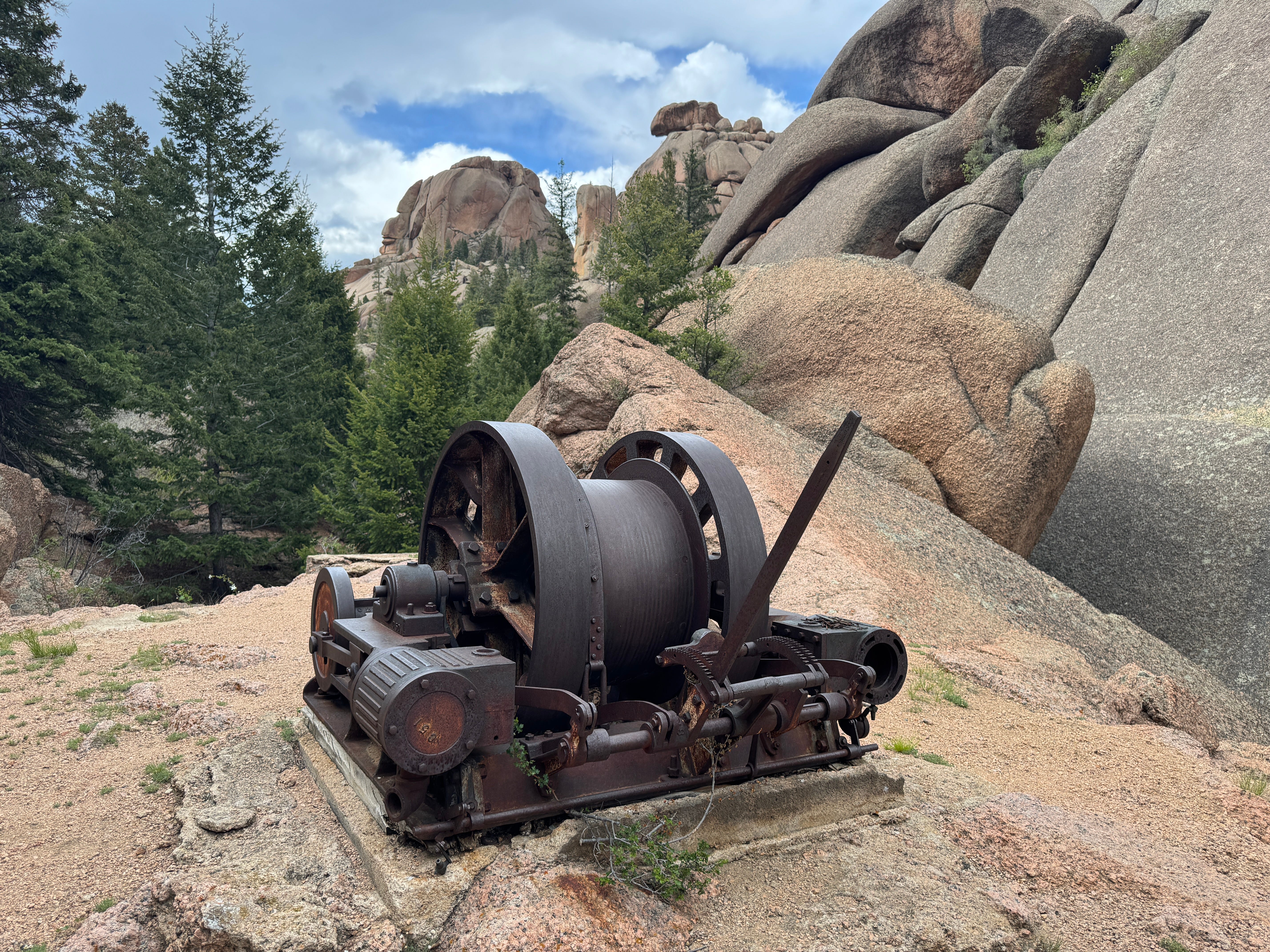
After many years of hard effort, the ill-fated venture was finally abandoned, but some of the cabins built for the workers and the steam hoist assembled at the “shafthouse” site were left behind. These relics are now historical artifacts. The steam hoist in particular is a fascinating piece of machinery—a steel ghost of the Gilded Age, abandoned to its hidden perch deep in the wilderness. When standing next to it, it’s remarkable to consider the effort required to even get that type of machinery to that location in the first place in the 1890s. It’s also fascinating to realize that, over a century ago, those workers probably camped in the cave we discovered since it was just a short walk from the shafthouse.
The steam hoist was placed where it was because Lost Creek flowed silently directly underneath it. Venturing beyond the steam hoist, we look for the place the creek enters the earth but are blocked by a twelve-foot drop, and although someone long ago (perhaps the engineers) placed a log with crude steps cut from it as a makeshift ladder, we decide it’s too dangerous in this location and make this our turn-around point.
But, we are still determined to find the Lost Creek. Perhaps we can find the place where it emerges downstream. In our search we walk down an enormous rock ramp, reminding me of the slickrock of Utah. This leads to more rock pile caverns and passages and we can now hear, but not see, the Lost Creek. It is near. We listen closely and realize that the sound of the stream is coming from a very specific location just down valley.
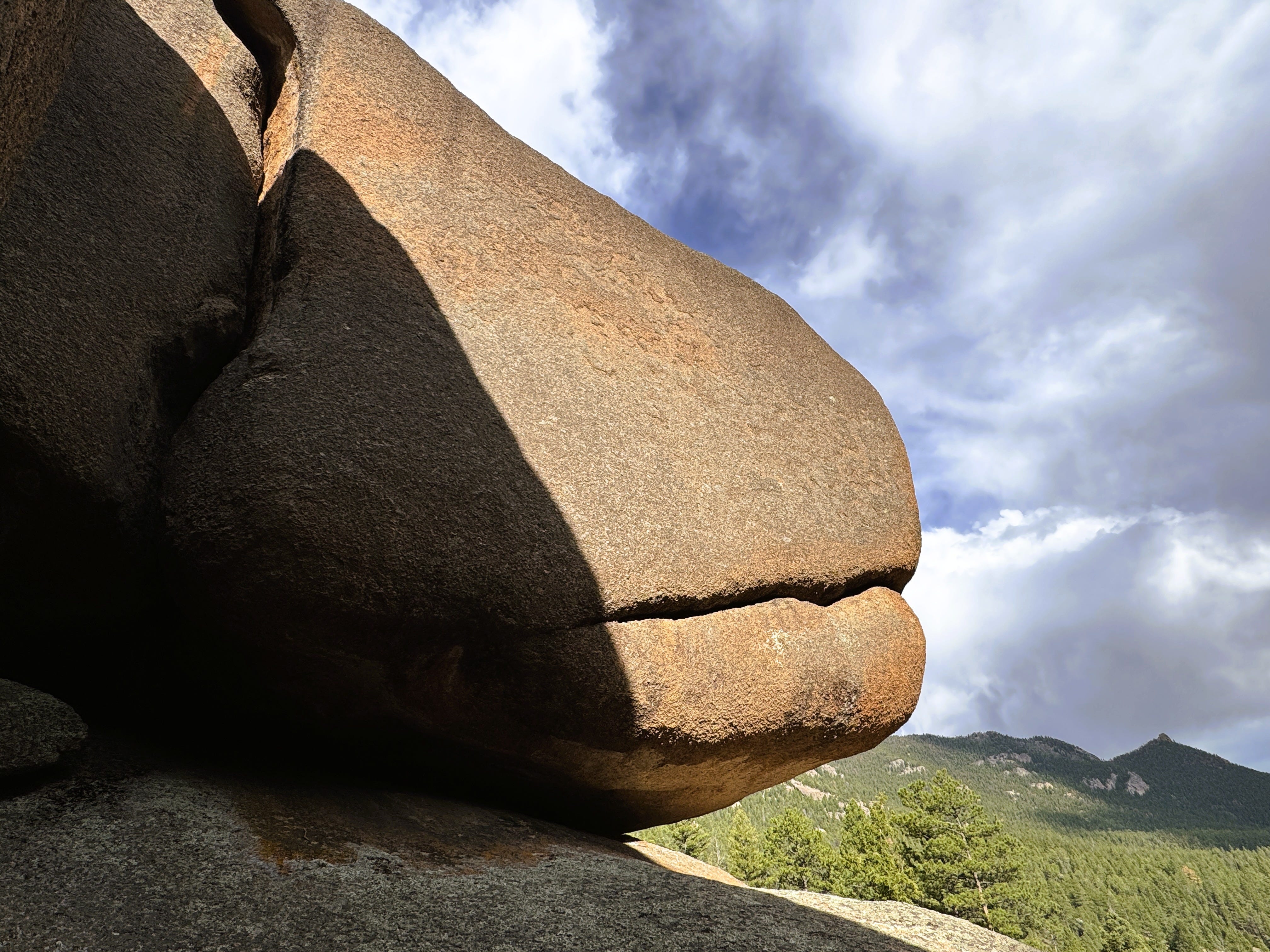
We make our way to the sound, passing under the lower jaw of a stone sperm whale head, and carefully find passageways down and through spaces between boulders and through the brush. The sound gets louder, but the water is still unseen until finally I catch a glimpse of movement below—clear water gliding over a sandy bottom.
We negotiate some rock ledges and finally arrive at a most remarkable little Eden. Brook trout swim lazily around in the clear, cold water, just emerging from a narrow tunnel in the rock into a pool before widening into a glistening riffle. Downstream a bit lies a stone monument the size and approximate shape of an upturned city bus—the stream abuts its face and gravity helps the water flow around the base.
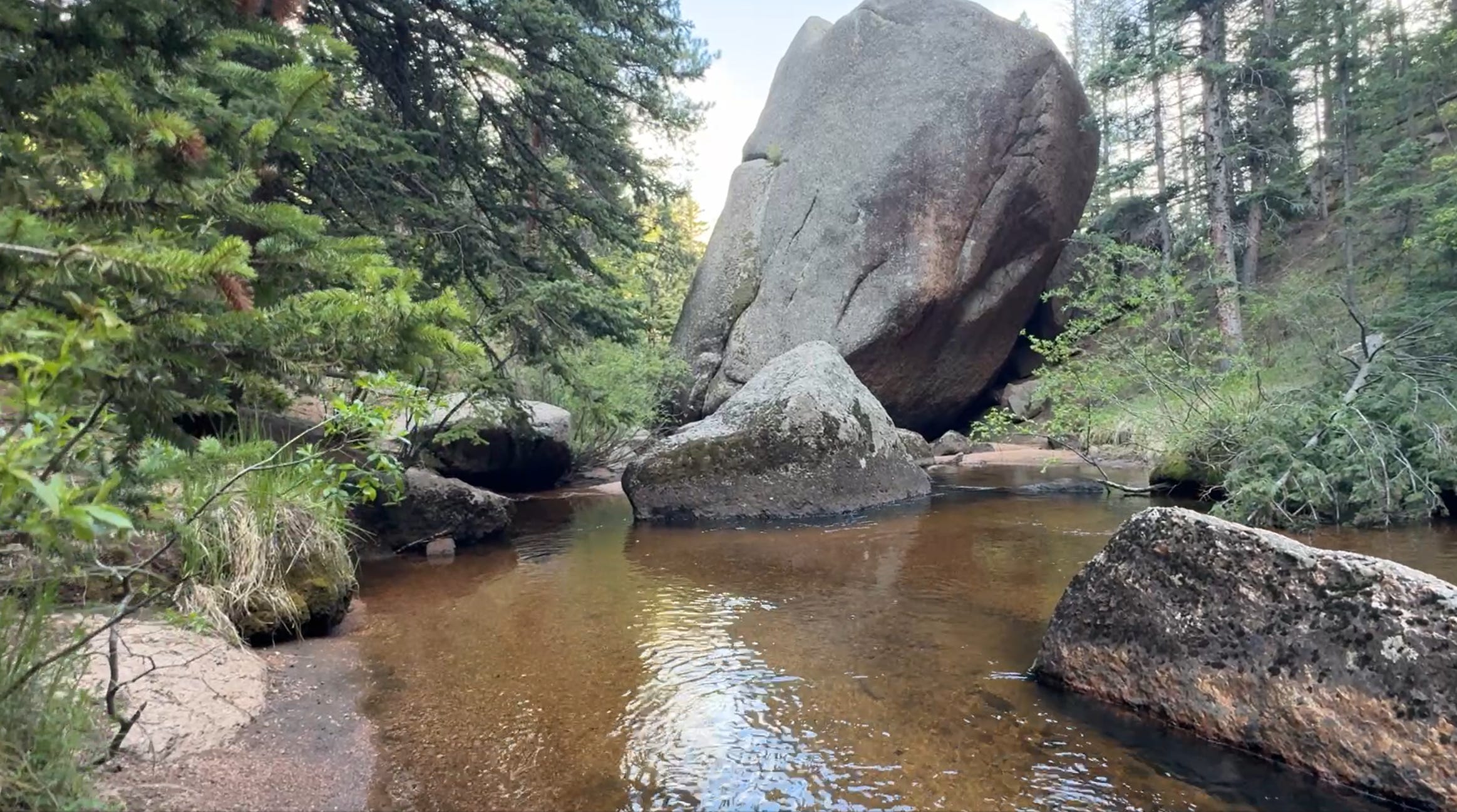
I believe, though I’m not sure, that this location is Lost Creek’s last emergence from the earth, and therefore, we are technically at the bank of Goose Creek as the name changes once it emerges for the last time. Lost Creek is said to drop under ground and reemerge in at least nine other locations, one of which I know well. It’s a place several miles farther upstream where a short off-trail exploration, if planned right, will take you to the exit of a large tunnel where the stream outflow is. In that place, the outflow is large enough to walk into and you can walk through the short tunnel like Indiana Jones exploring a subterranean river.
Locals keep the precise location of these hidden treasures close to the vest, and I intend to honor that tradition here. These places are not easy to locate and often even harder to get to. They are well off-trail, unmarked, and largely undisturbed.
And it should remain that way. A major part of the human appeal of wilderness is the sense of potential discovery, of the idea that, within our wilderness, there are still caves to stumble upon and disappearing rivers to find, and that when we do find them, there will be no interpretive signs and no safety railings.
On our return hike we follow a tiny tributary stream past a series of extraordinary campsites, some of which are sheltered by rock slab ceilings and stone alcoves where a person can set up a camp well out of the elements like a caveman. Inside one of them we find a little plastic box containing photos and a memorial notebook of a man who died way too young nine years ago, but lived a life of adventure exploring the Lost Creek Wilderness. In the notebook, a simple message: “We were having fun.”
Yes, you were. Rest in Peace, John.